A practice-led thesis on what cloth remembers — reviving my grandmother's interrupted craft of carpet-weaving, and restoring a broken thread between her generation and mine.
Throughout my textile design studies, I found myself returning to weaving again and again — never quite understanding why, until I discovered its connection to my grandmother. In her early years she wove carpets, a passion set aside after marriage and the domestic responsibilities that followed.
Reviving this craft became a way to connect with her — to understand how easily a woman's creative life can be folded into the background of a household. Through my work, weaving becomes a bond between us, restoring a thread broken between generations.
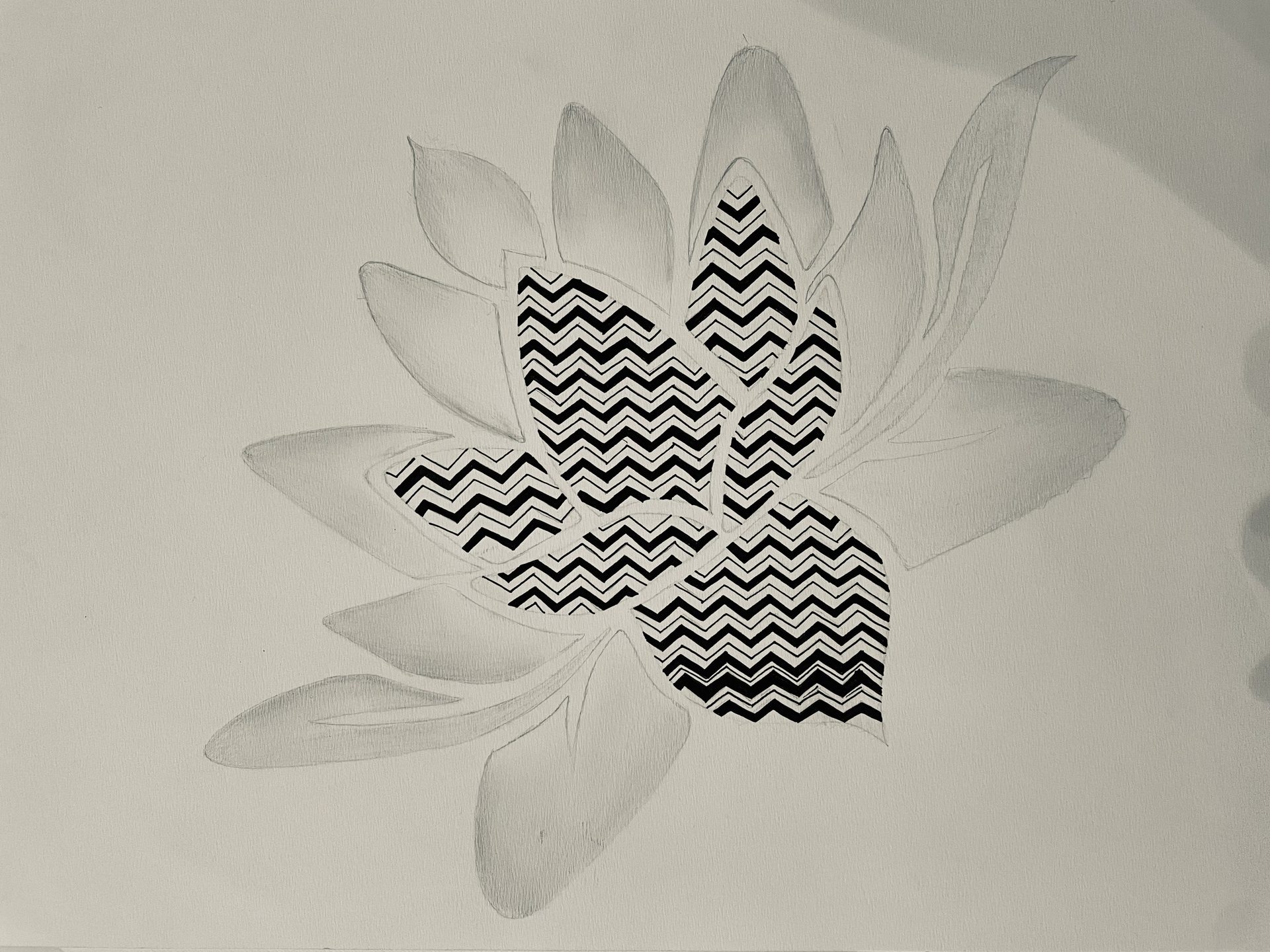
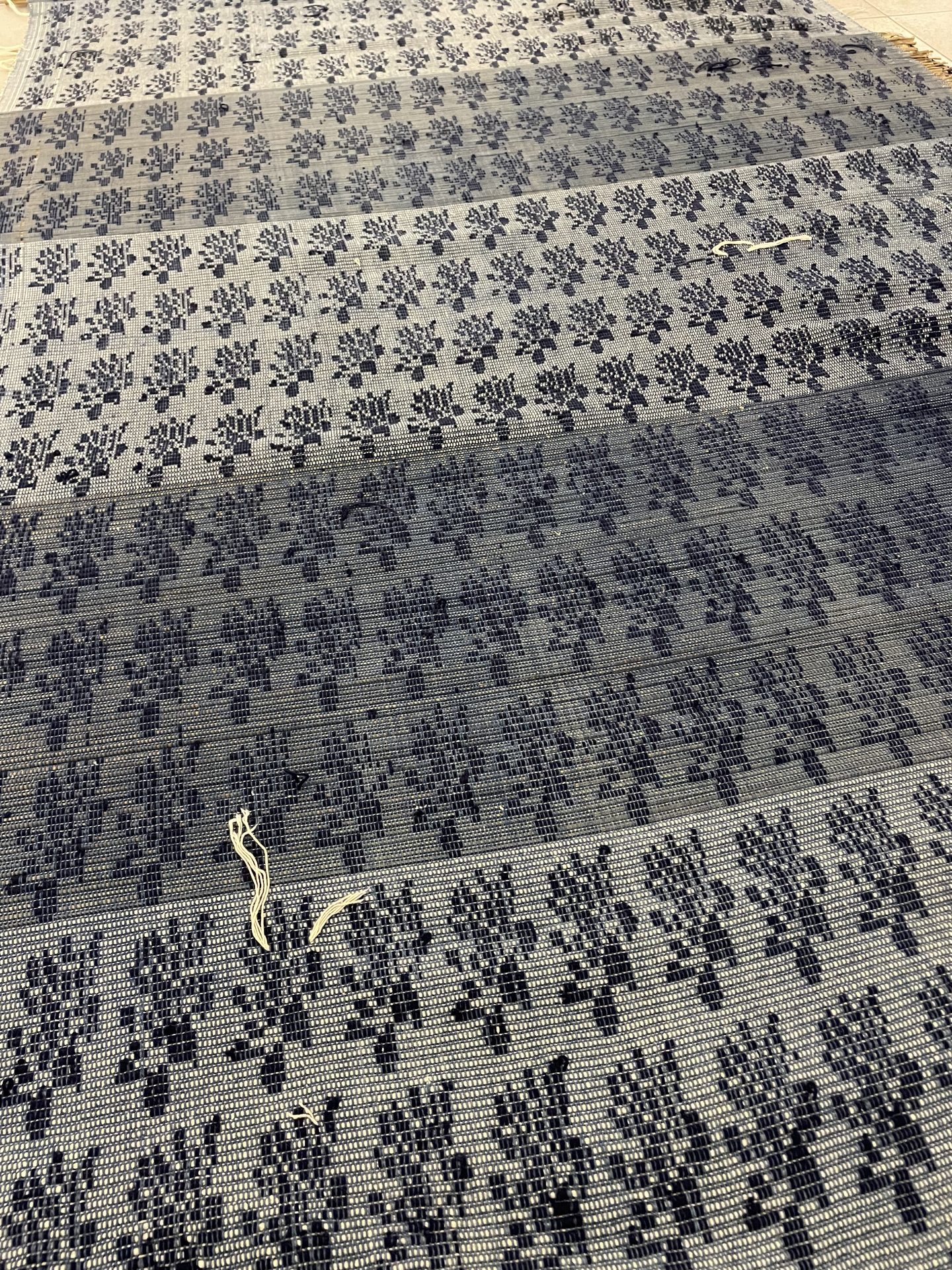
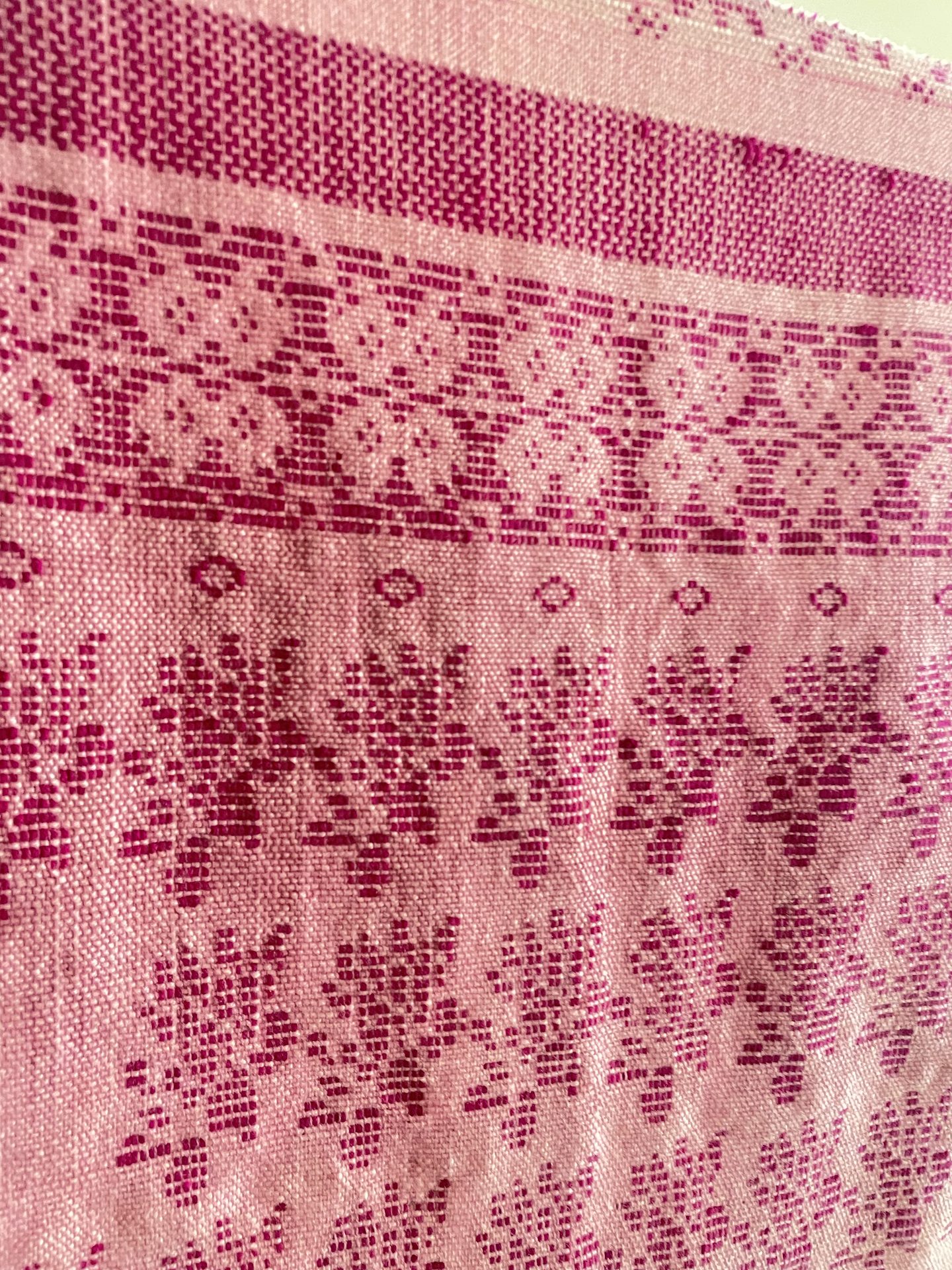
The lotus flower runs through every piece as her symbol — drawn from her love of gardening, and standing for the strength, resilience and quiet growth that defined her life. My work brings forward her hidden narrative: rooted in tradition, unfolding through my hands.
If a woven structure is a set of decisions encoded in thread — warp over weft, float over ground — then every cloth is an archive. This thesis began with a single realisation: my grandmother once wove carpets as a girl, a fact I had never known until an offhand family conversation revealed it.
That conversation stayed with me — not just because she had woven, but because something so significant to her life had quietly disappeared from our shared memory. It made me think about how much of women's creative labour inside the home goes unrecorded, absorbed into the everyday and never written down.
My research centres on this absence: what happens when a craft is interrupted by marriage and domestic duty, and how it might be revived — not as nostalgia, but as a living, contemporary practice that still carries its origins.
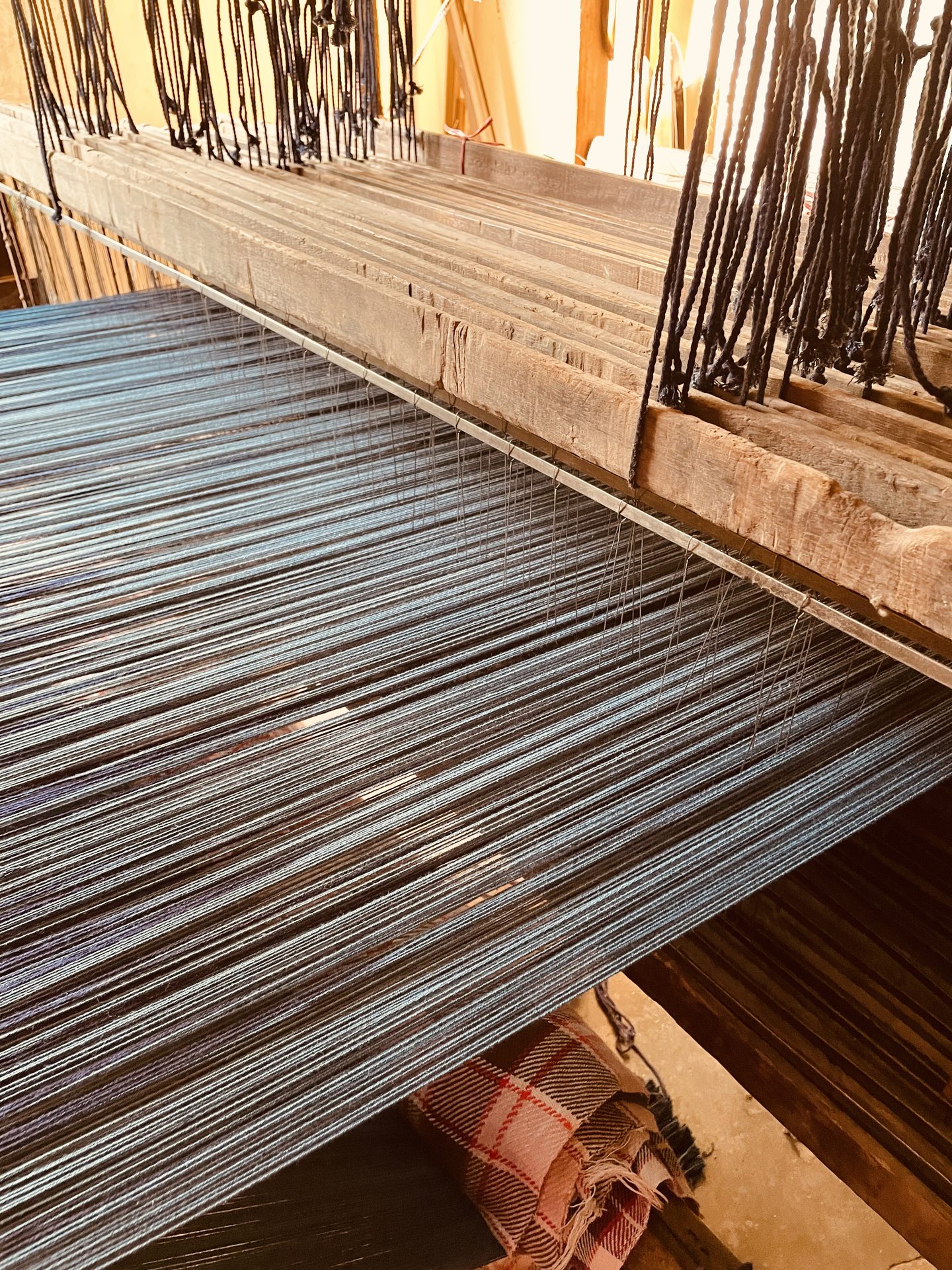
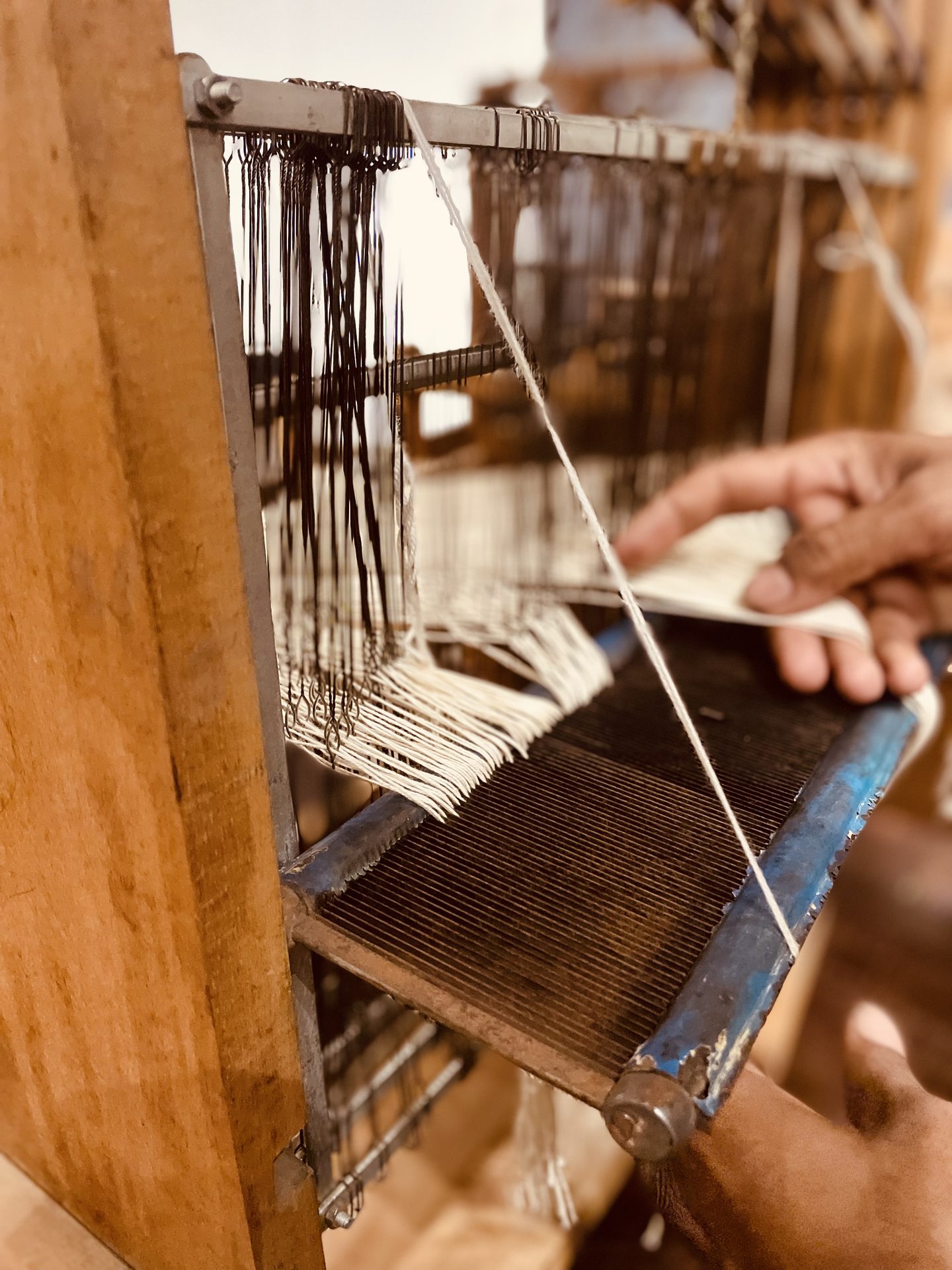
This project is built on an extensive practice-based methodology, where the act of hand-weaving itself becomes a way of generating knowledge. I chose hand-weaving deliberately — it is slow, repetitive and labour-intensive, and that repetition mirrors the patience, care and endurance bound up in domestic life.
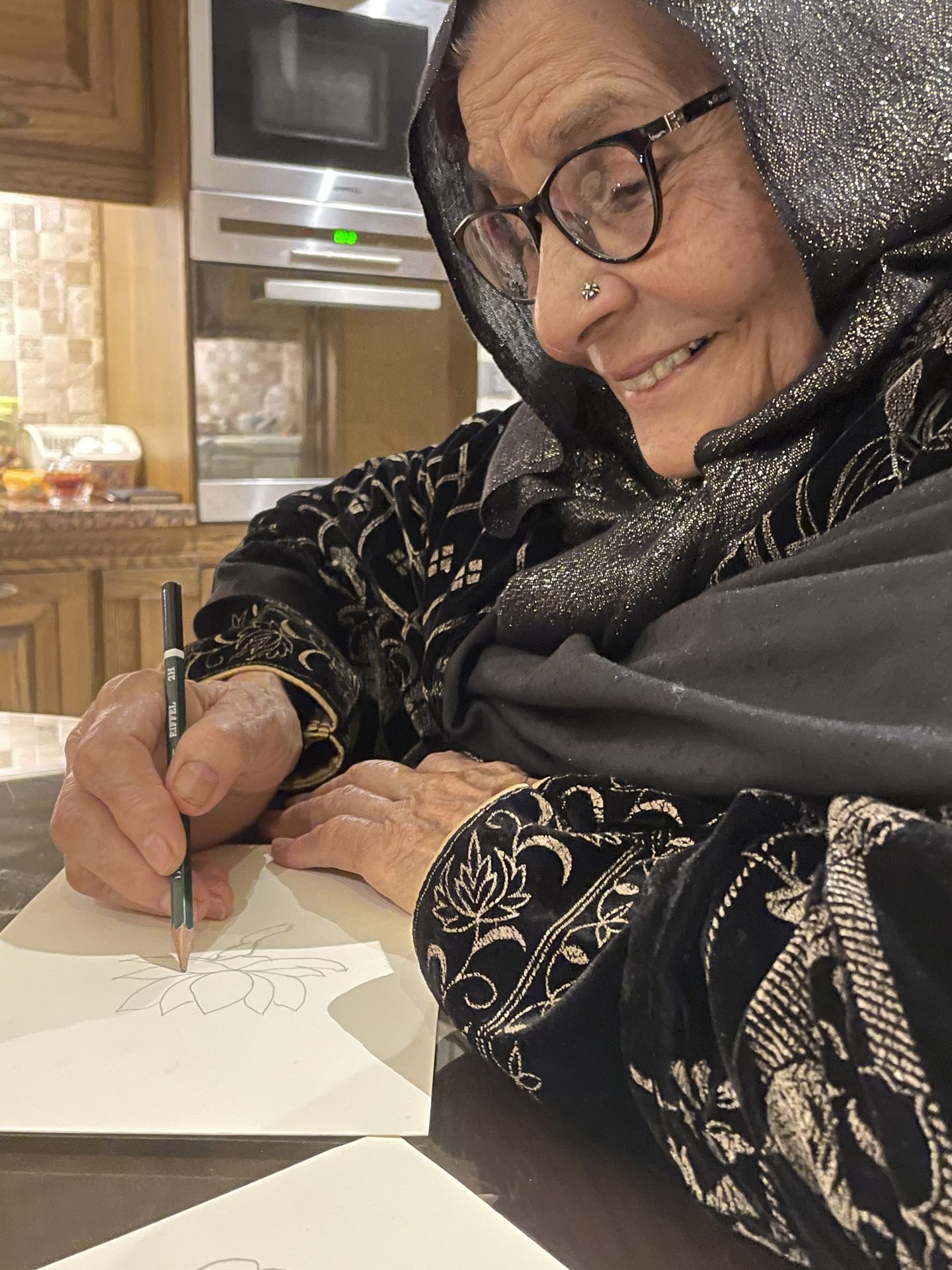
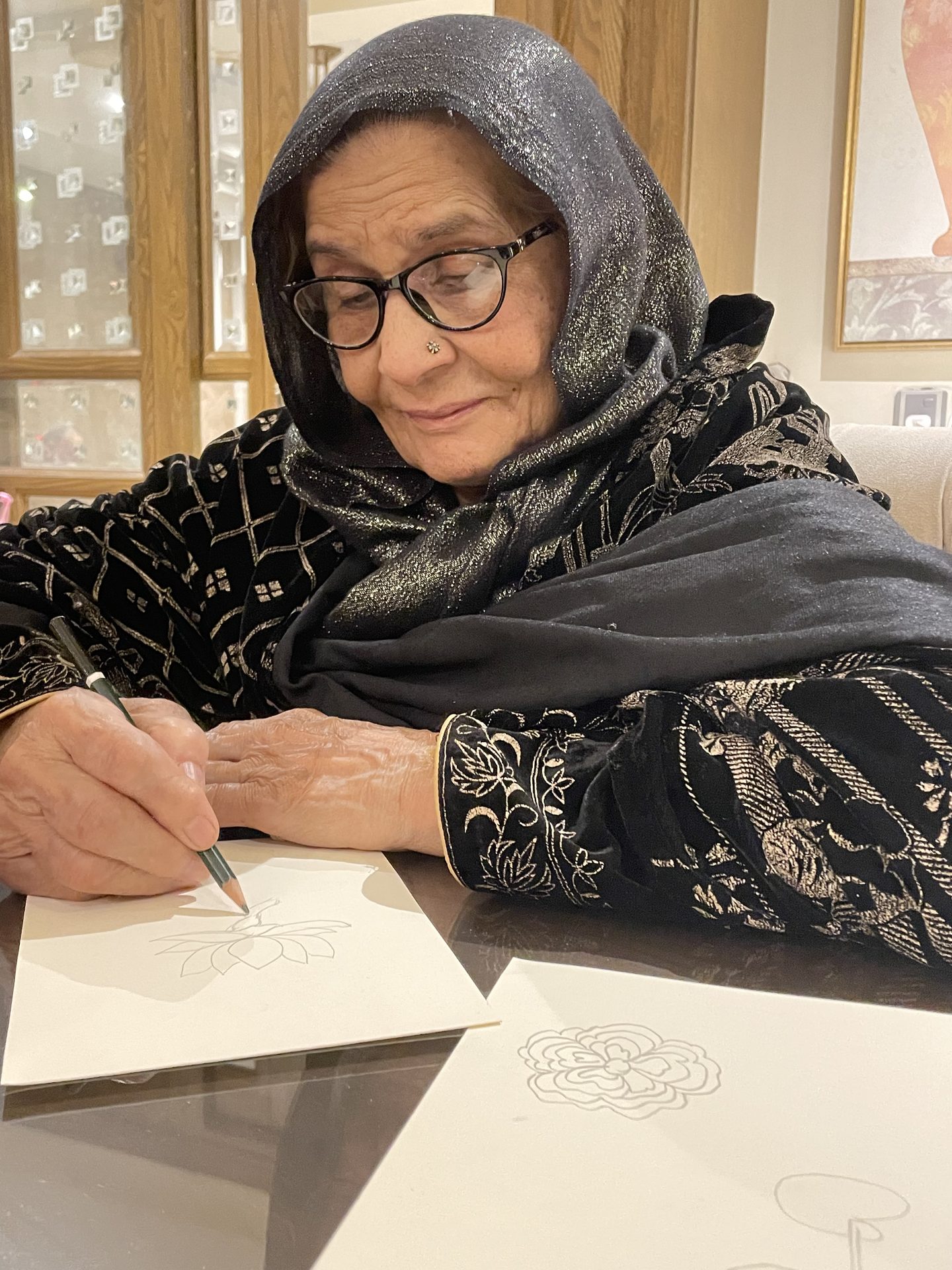
With no physical archive of my grandmother's weaving — no surviving cloth, journal or photograph — I turned to oral history. Open-ended conversations with her at home became my primary source, helping me piece together fragments of a story never written down: her years learning to weave, the domestic duties that gradually replaced it, and her lifelong love of gardening and the lotus.
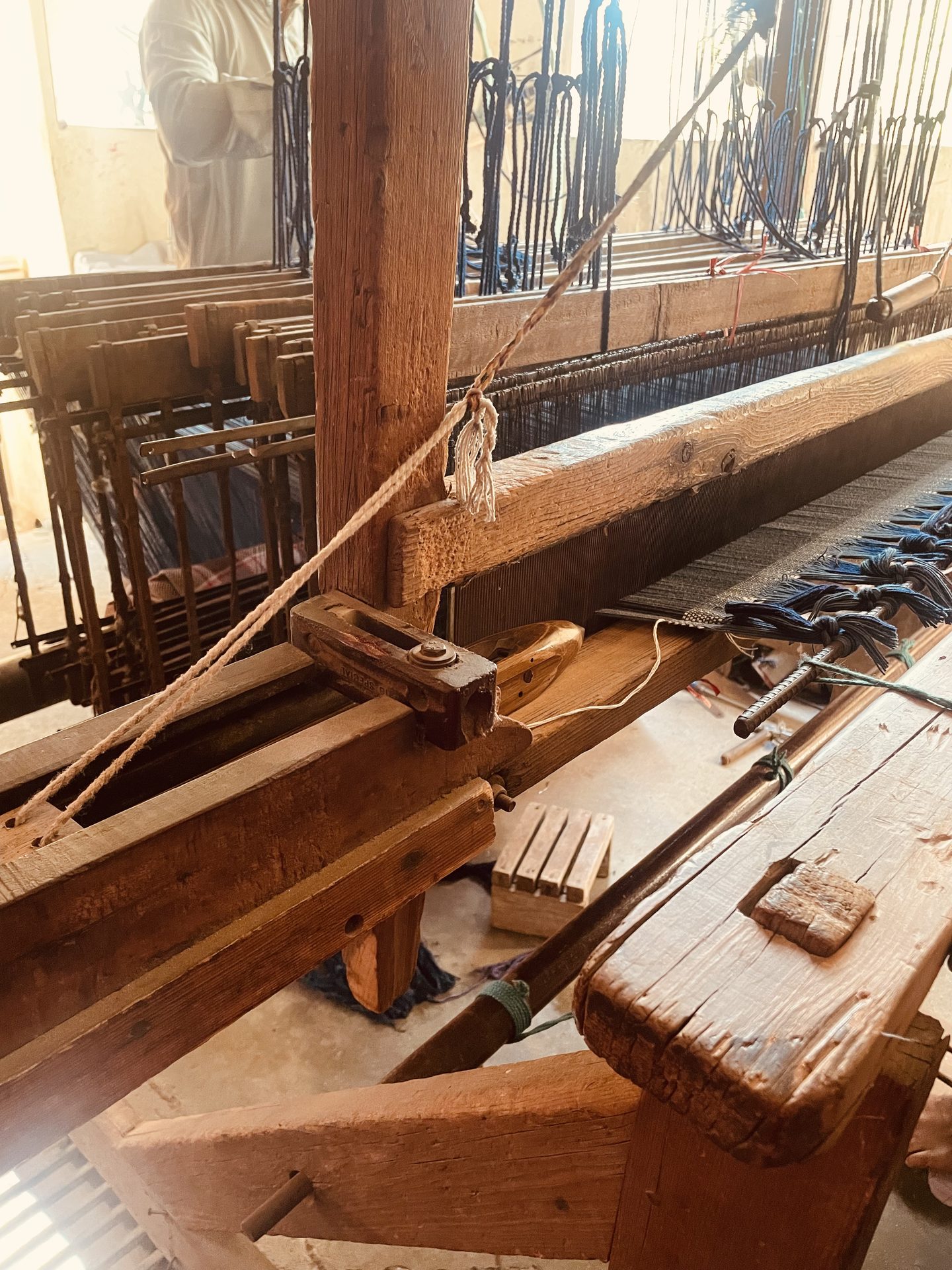
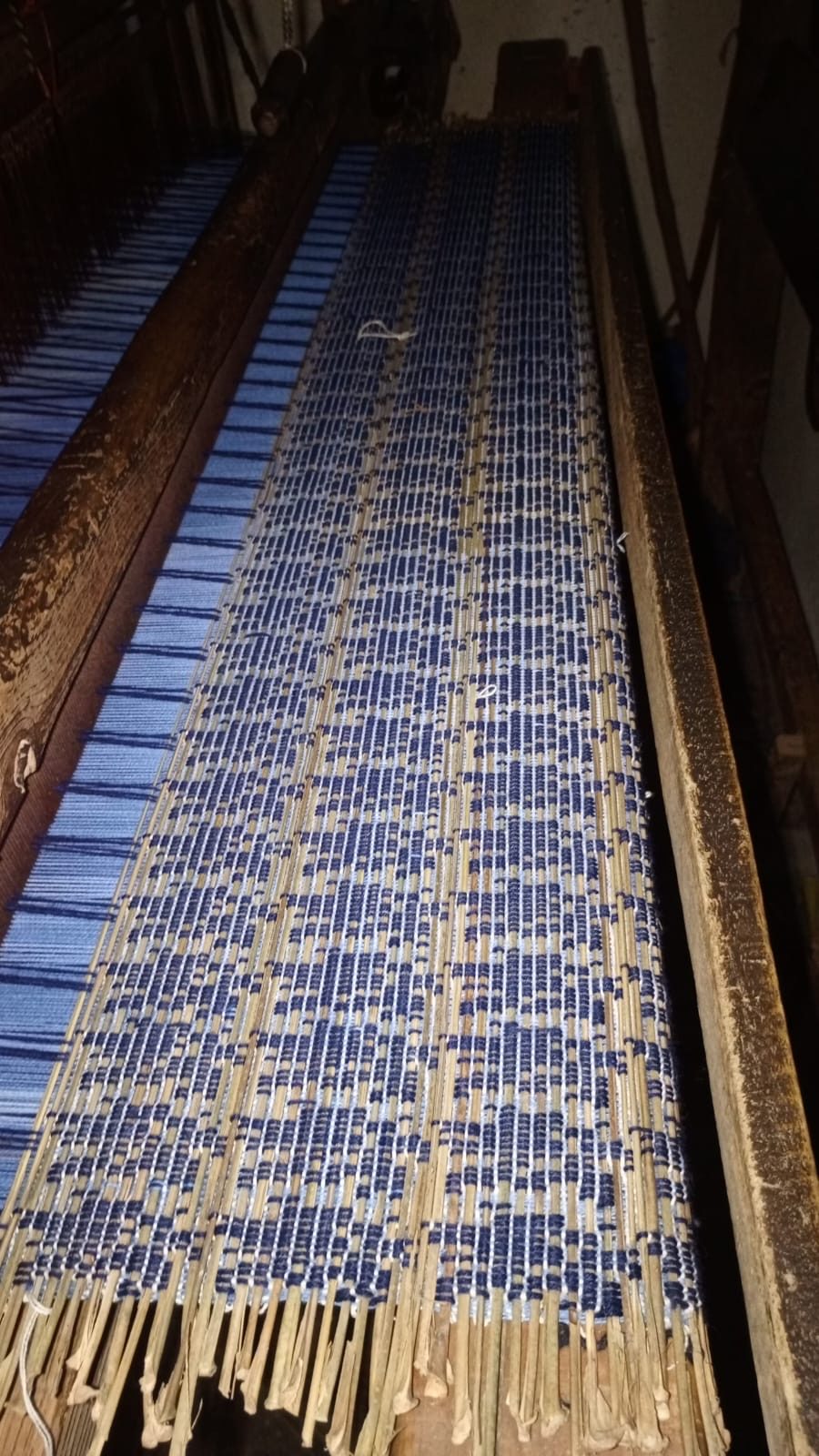
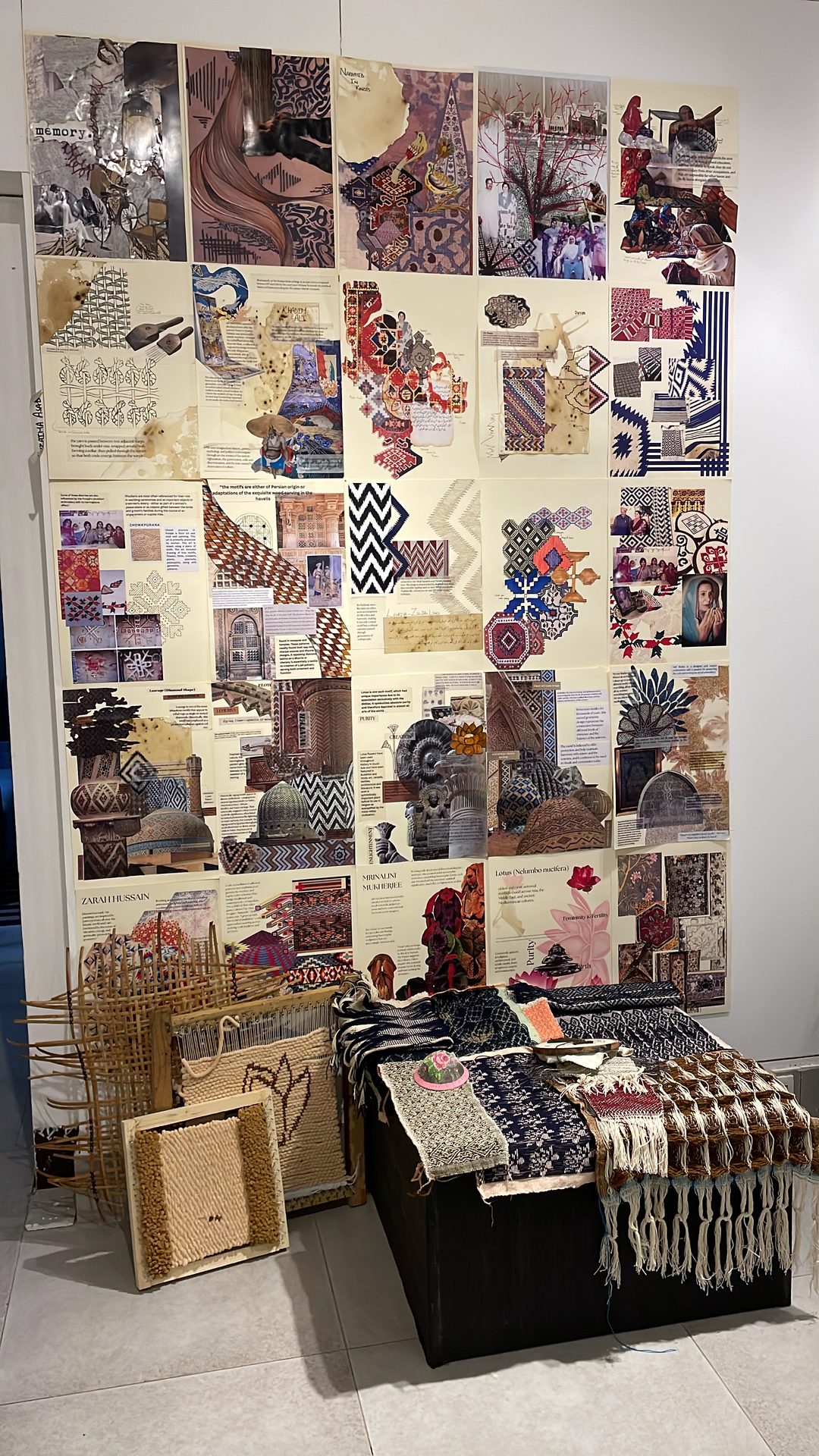
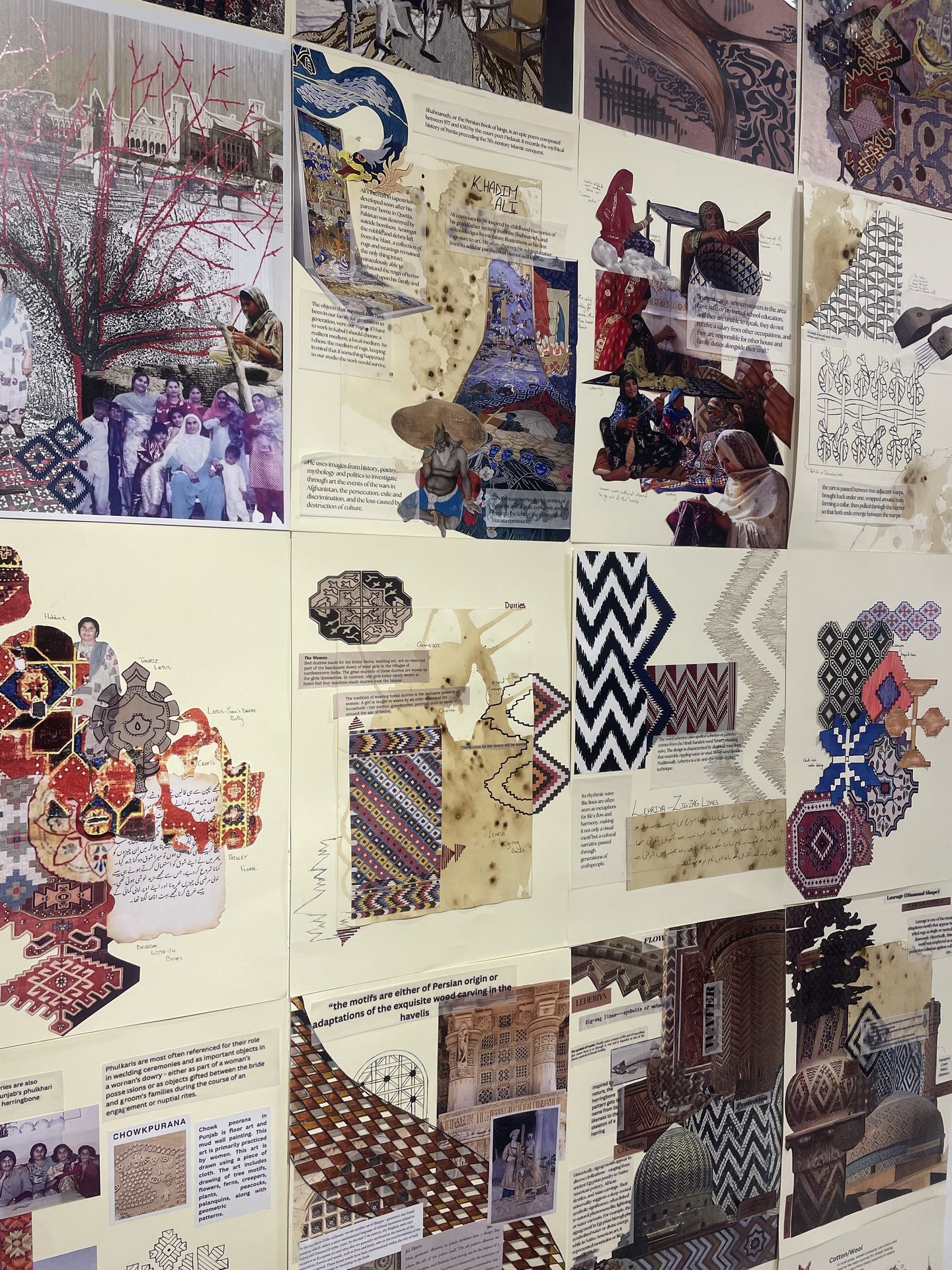
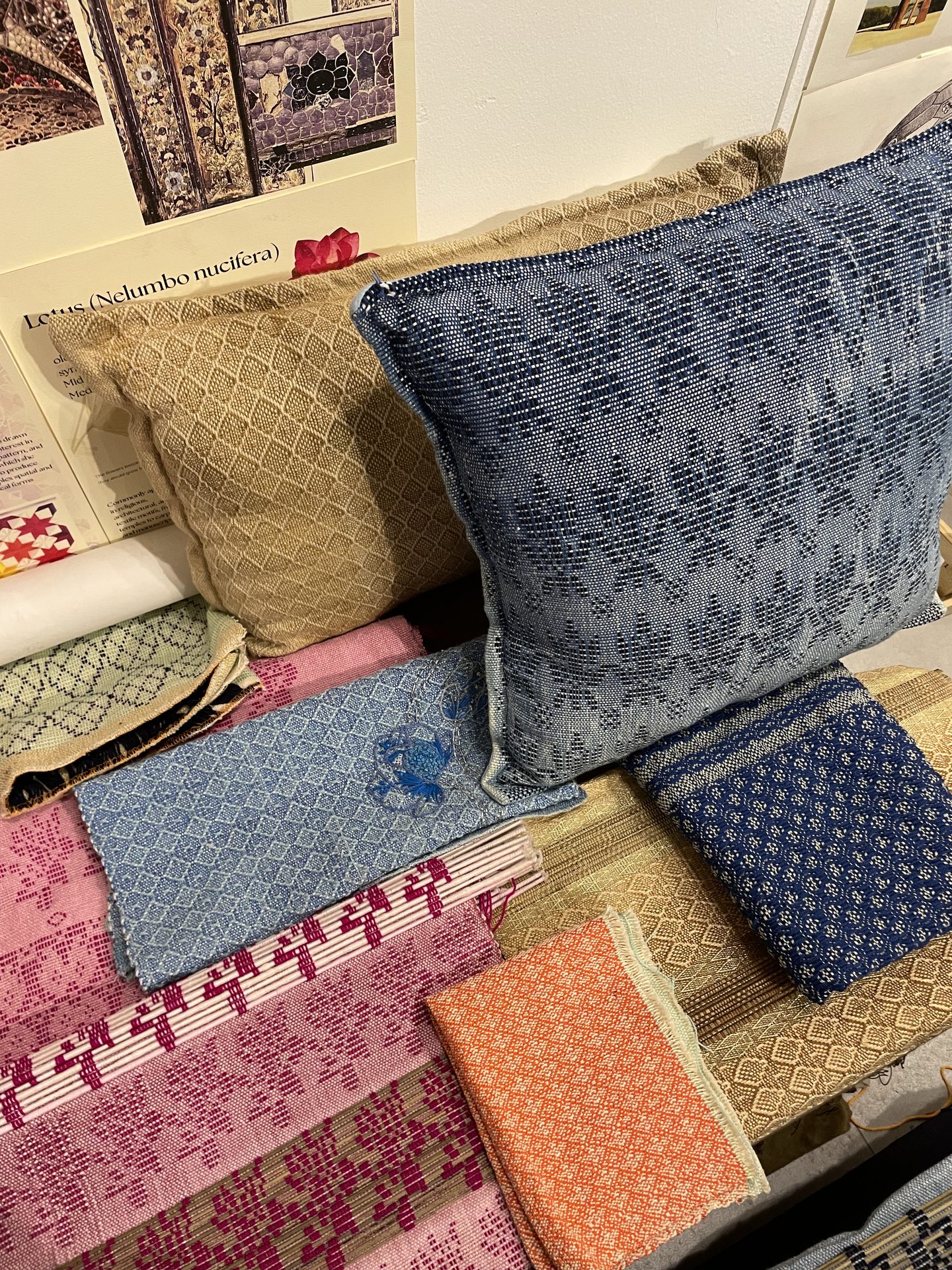
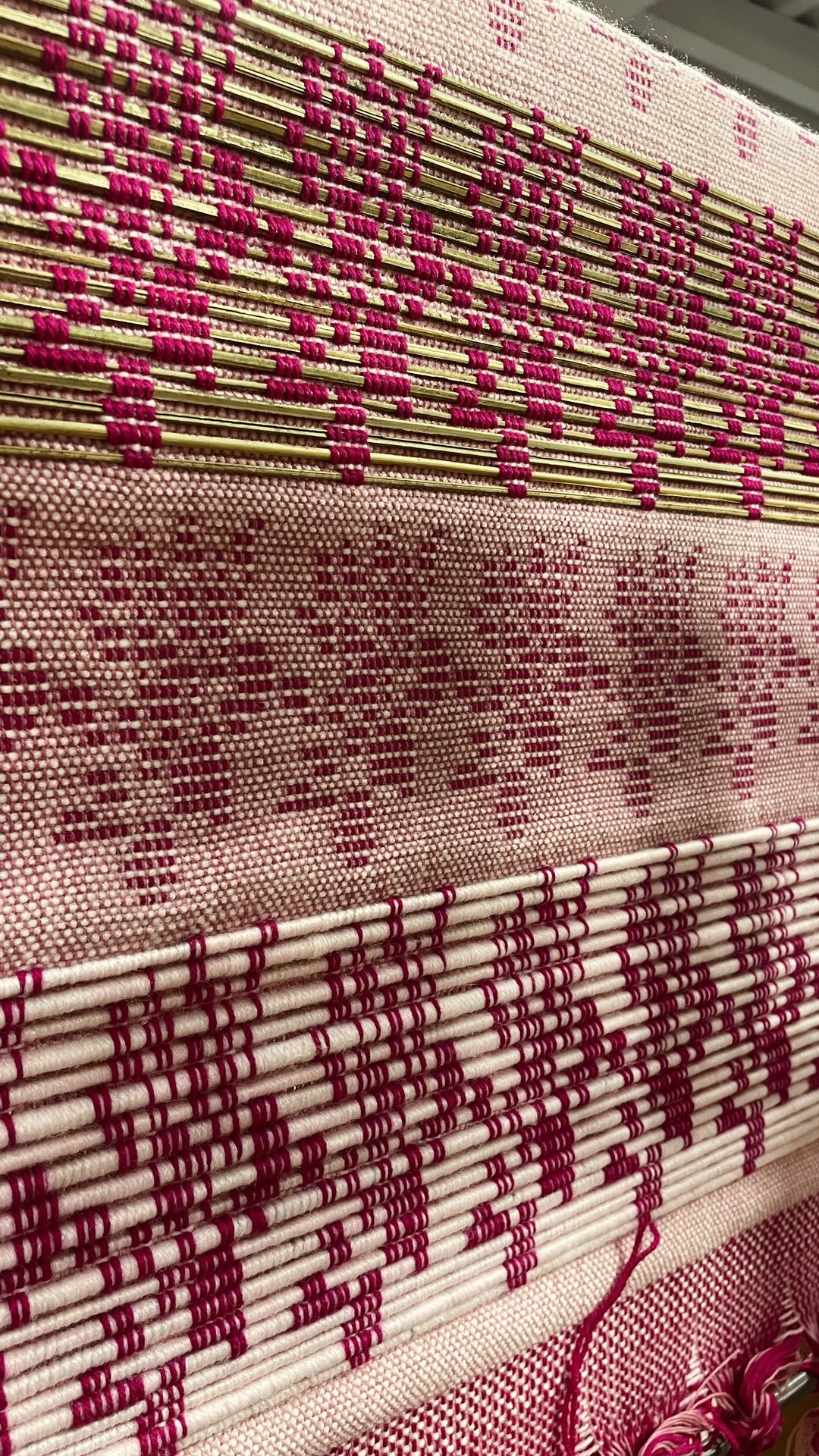
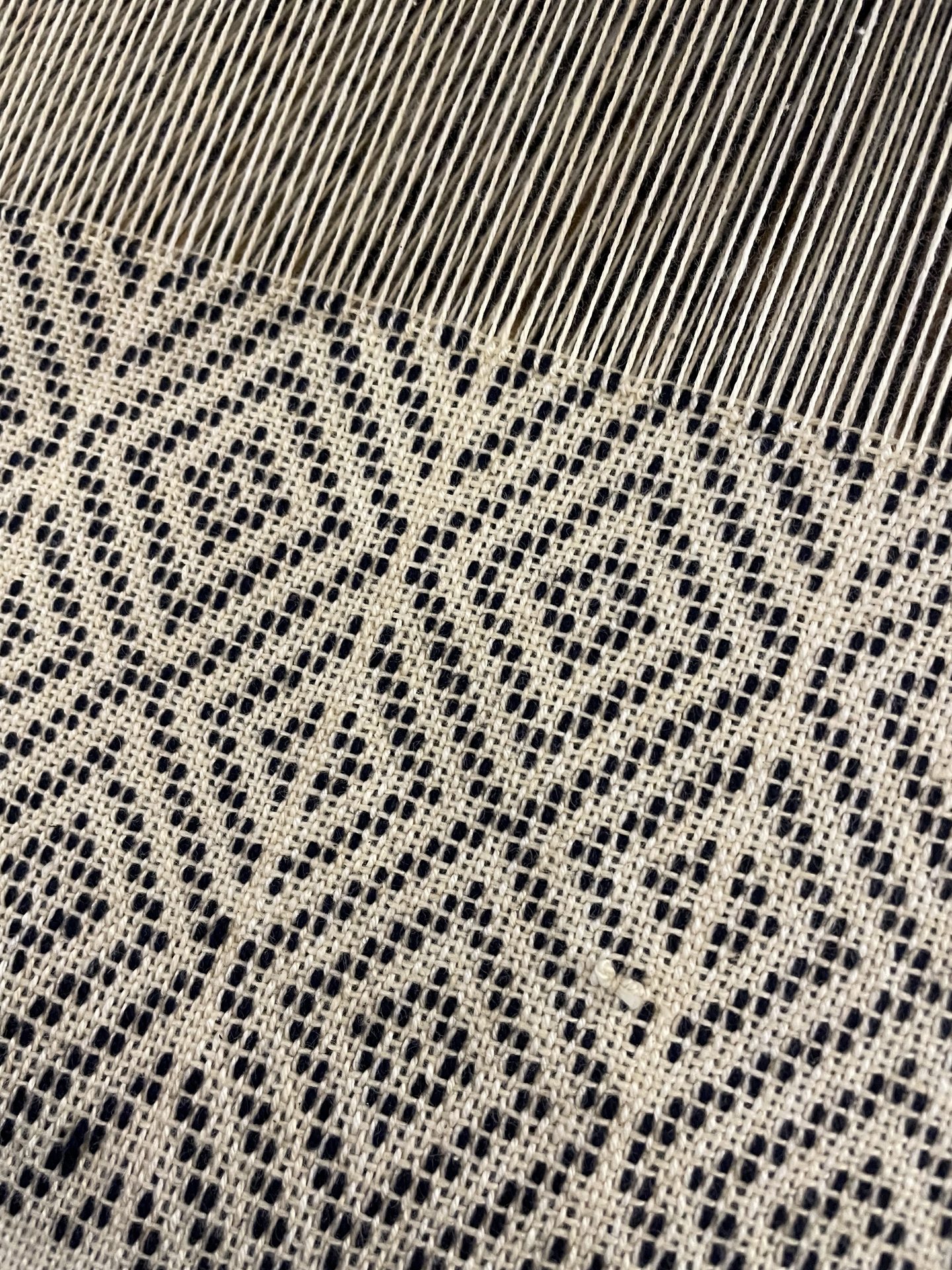
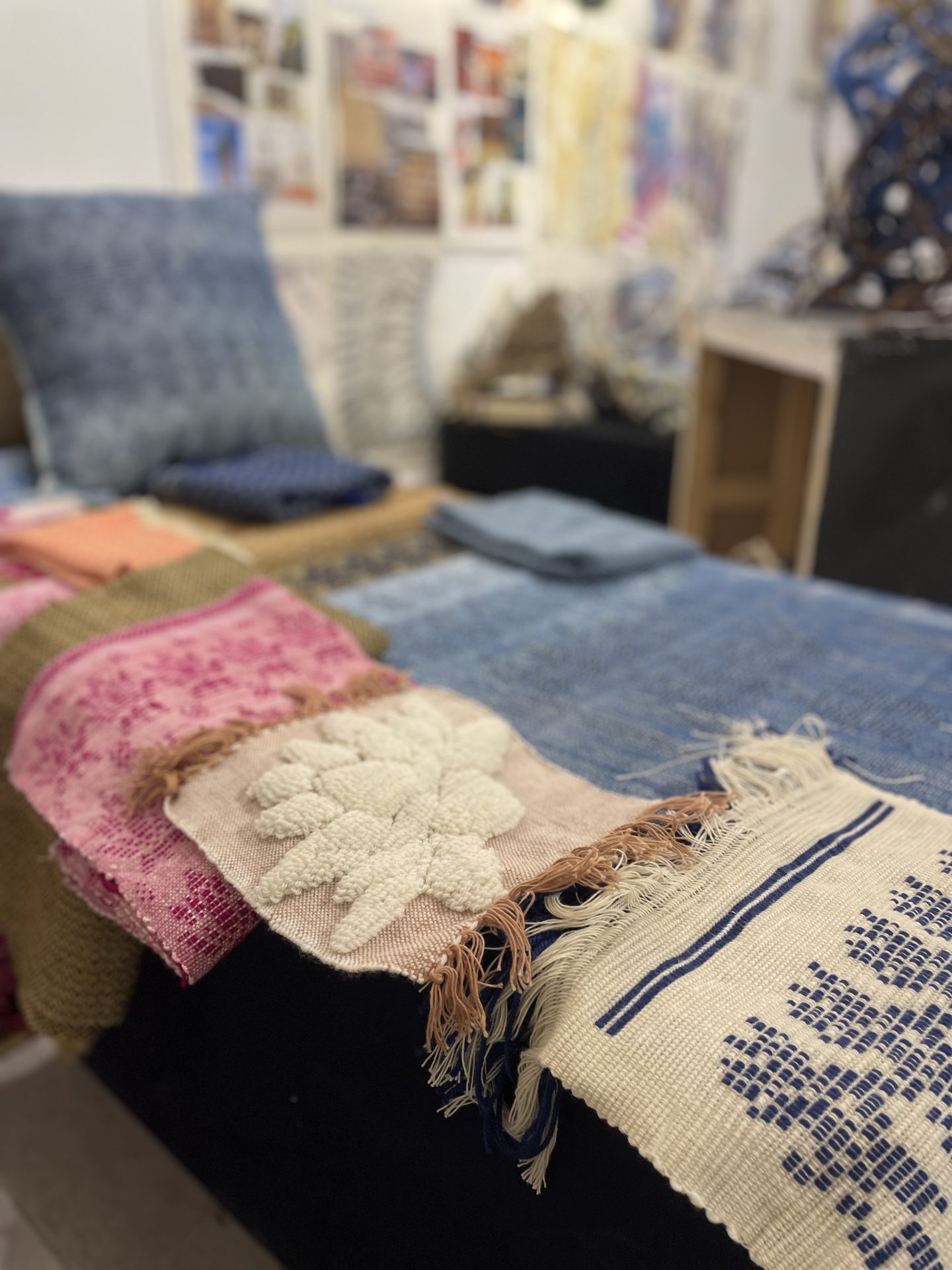
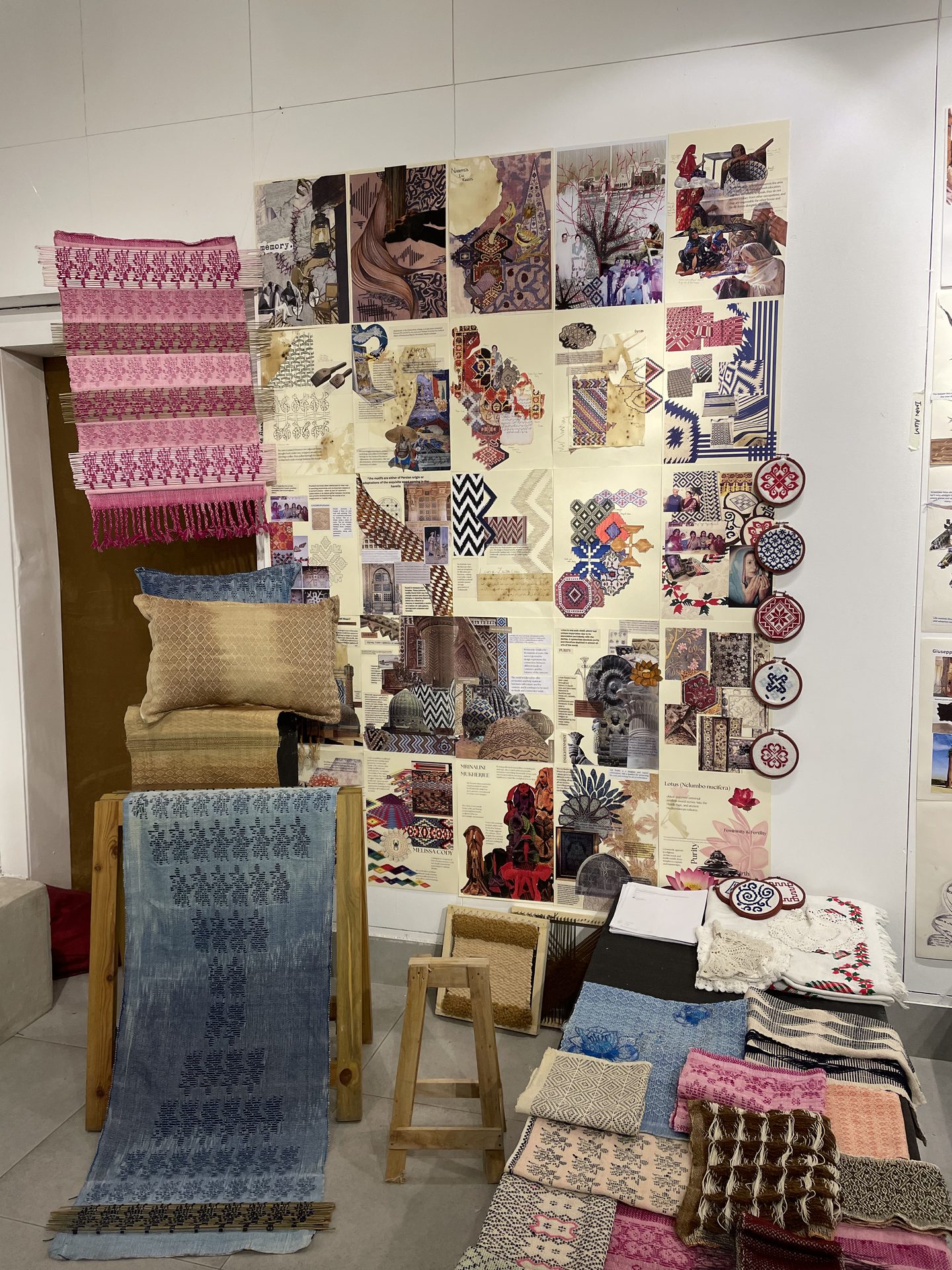
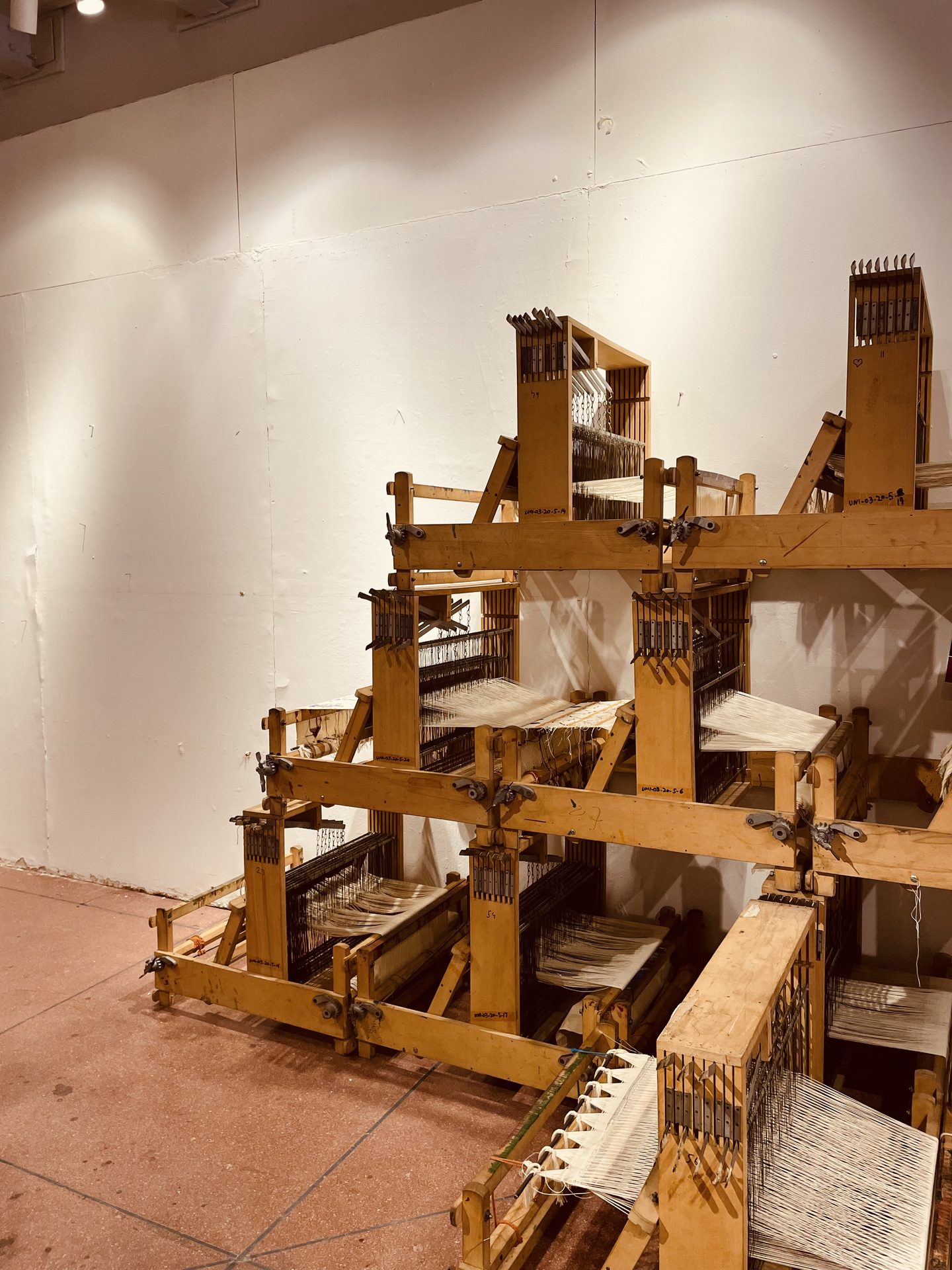
Studio work — sampling on 6, 8 and 24-shaft looms, natural dyeing, mood boards and colour studies — translated these conversations into material form.
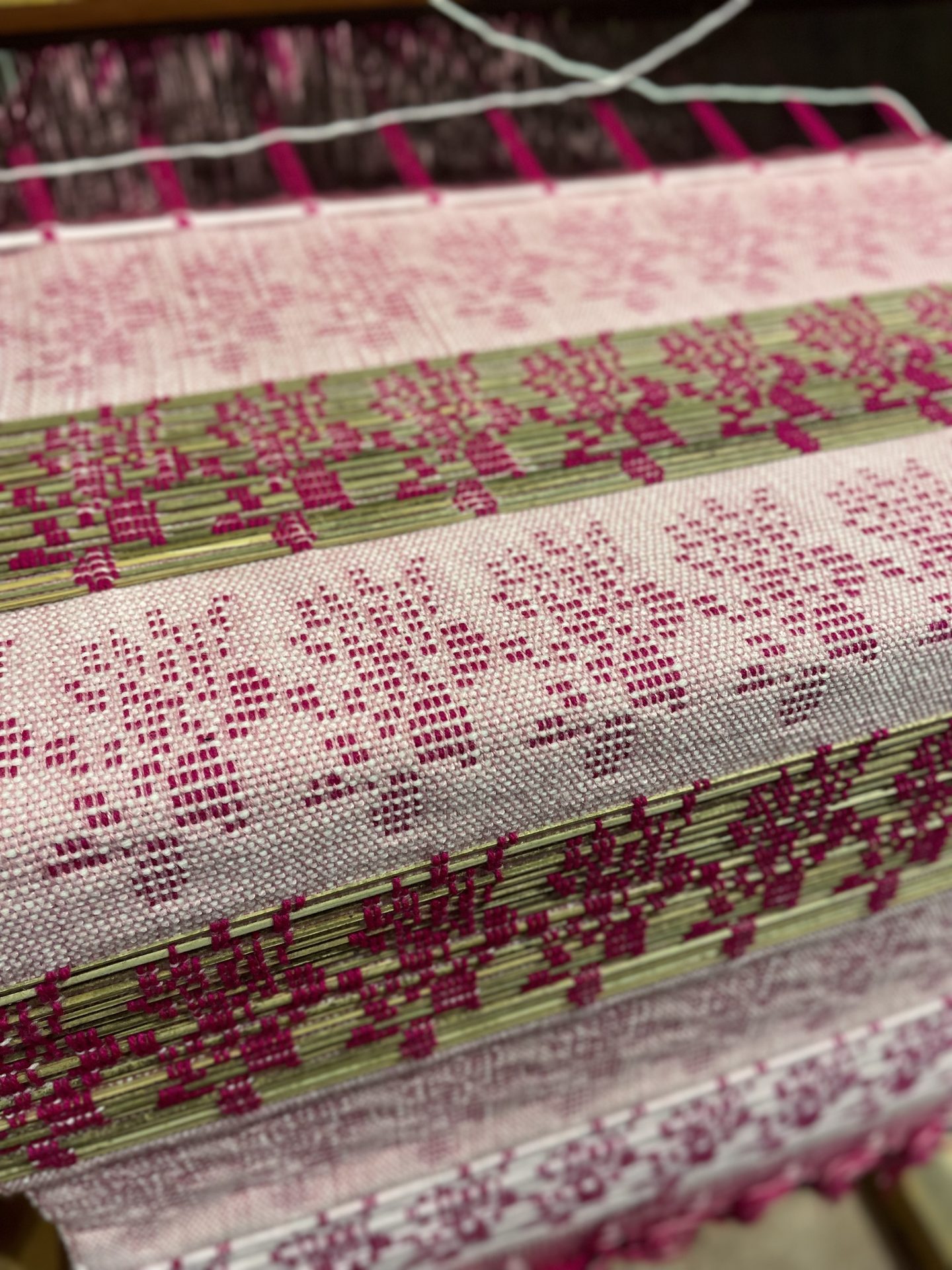
The studio became a place of slow, repetitive labour — winding warps, adjusting tension, working pedal and jacquard looms for hours at a time. This repetition was never incidental: it embodies the same patience, care and endurance that ran through my grandmother's domestic life, and became, for me, a way of inhabiting her experience rather than simply studying it.


The lotus runs through every surface in this collection — not as decoration, but as a portrait. It came from watching my grandmother in her garden, and from her own memory of the flower as one she loved and grew. It stands for growth, resilience and quiet strength — for what she could have been, and what she was allowed to be, given the circumstances of her life.


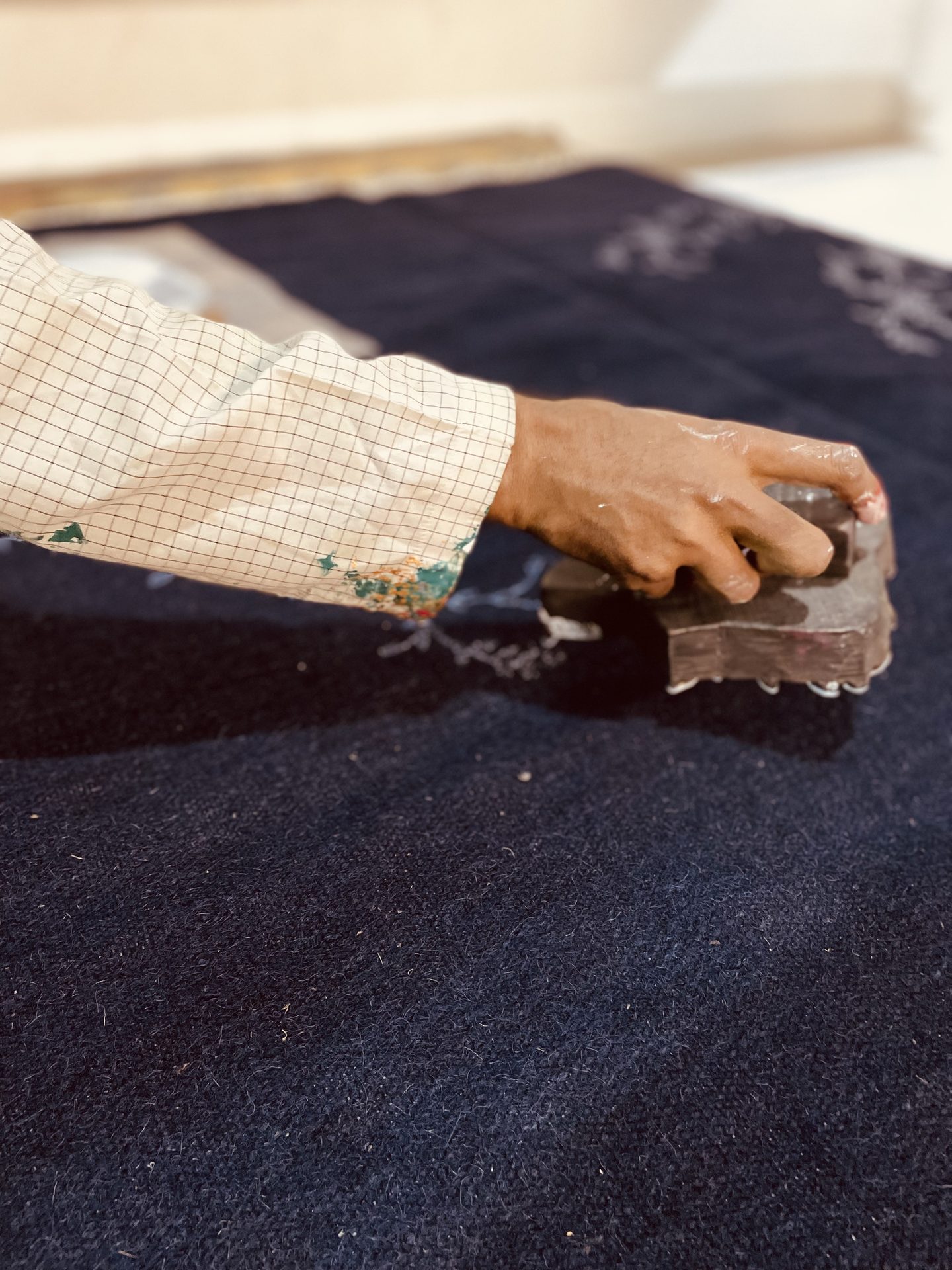
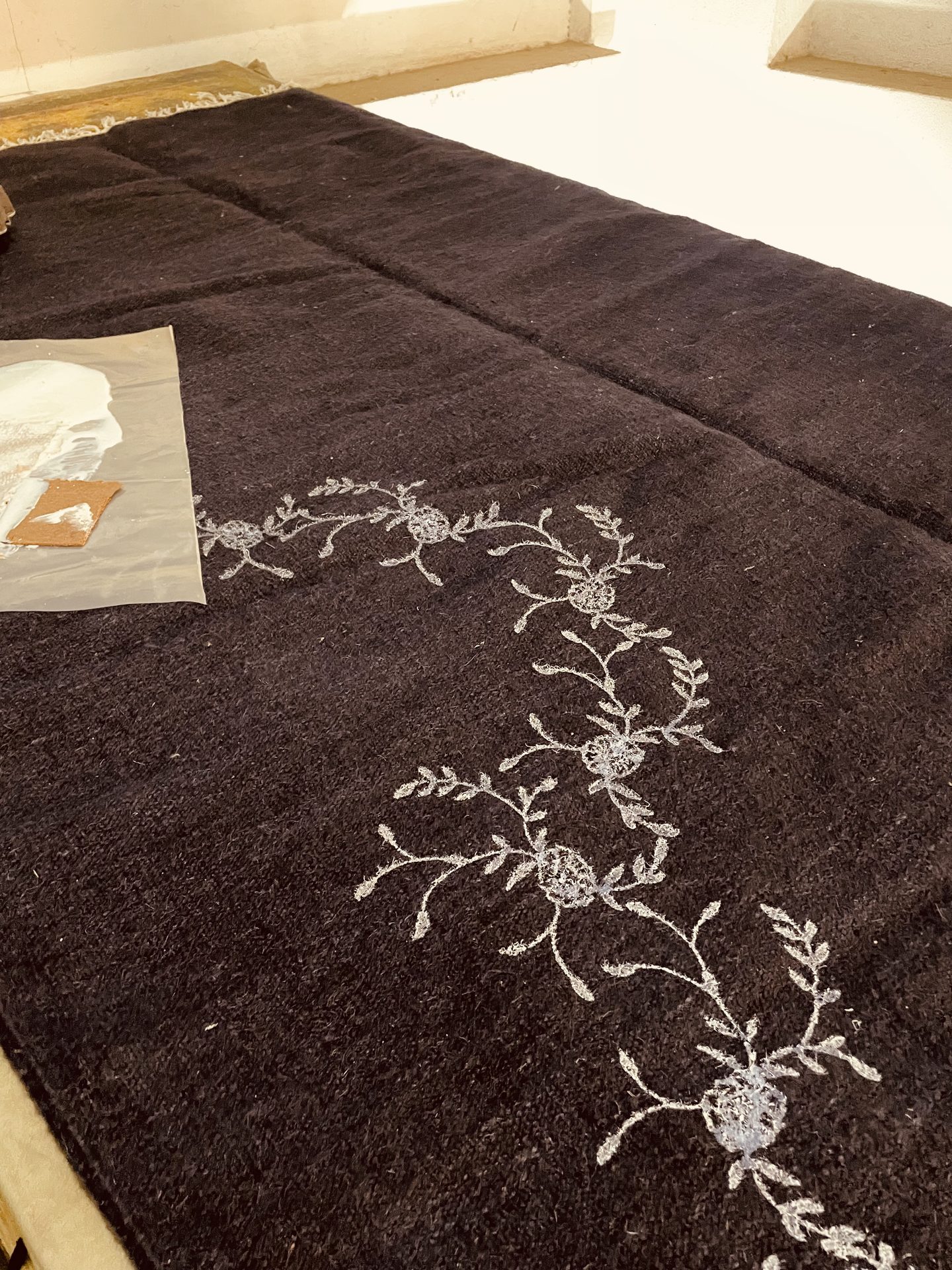
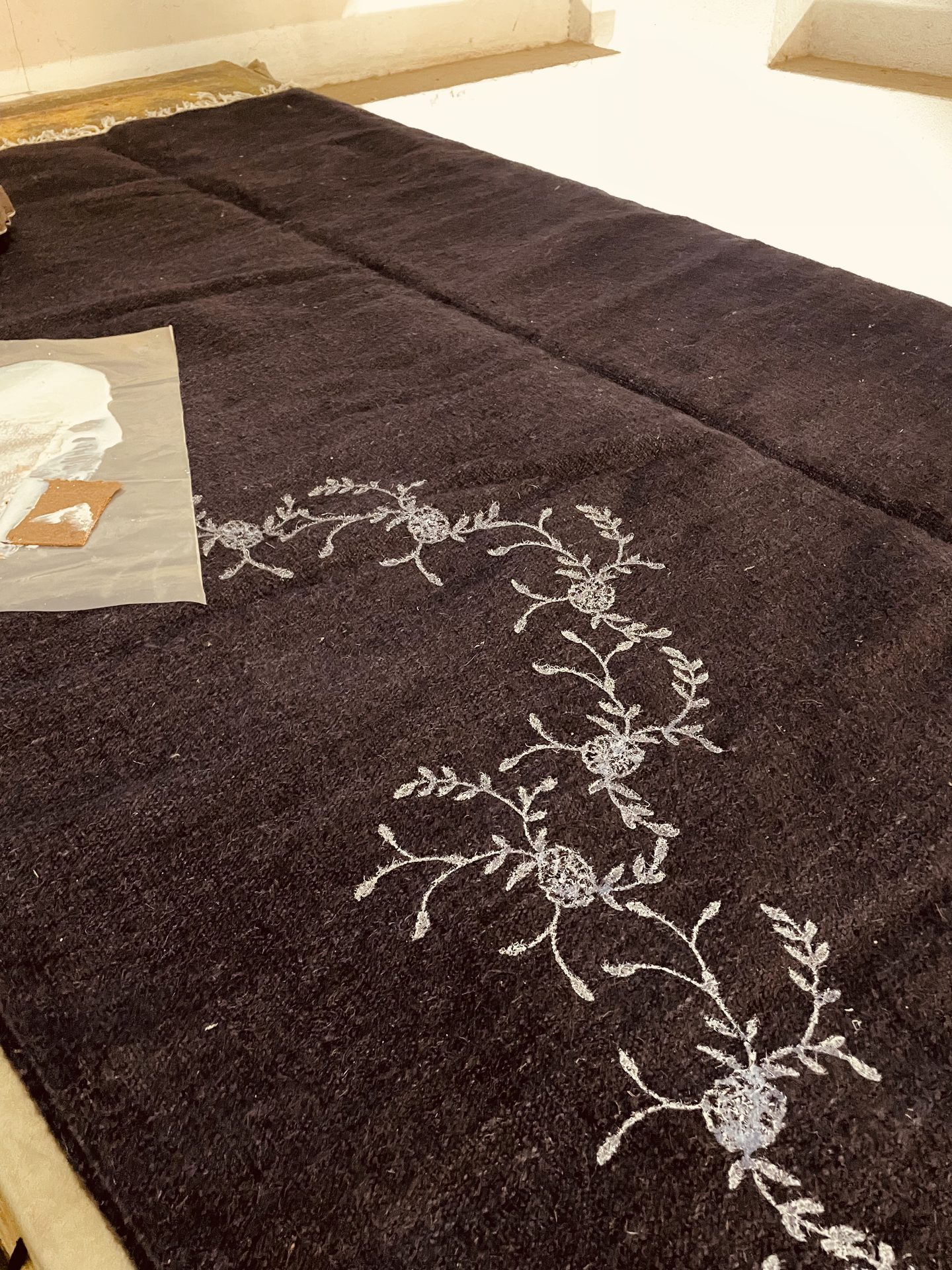
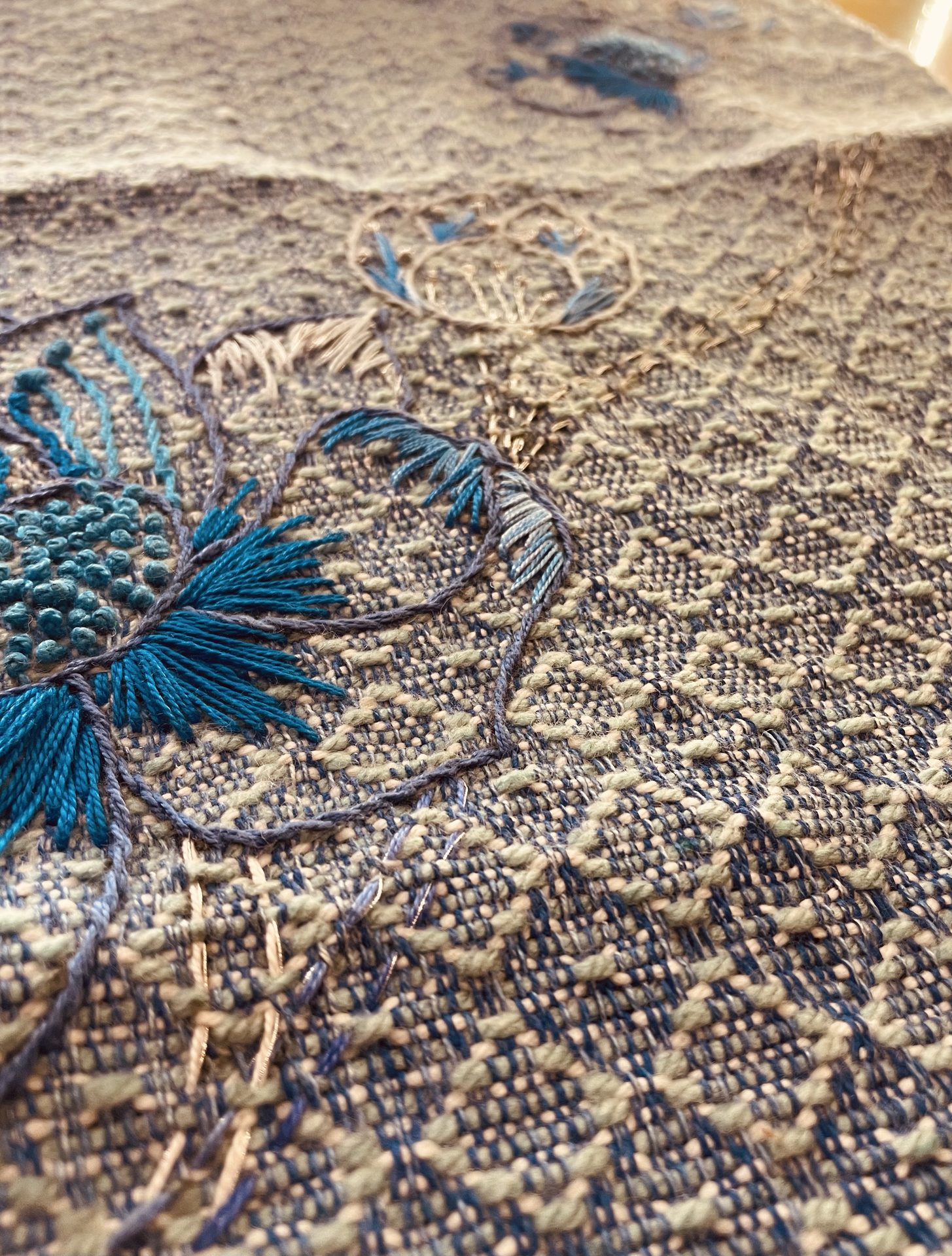
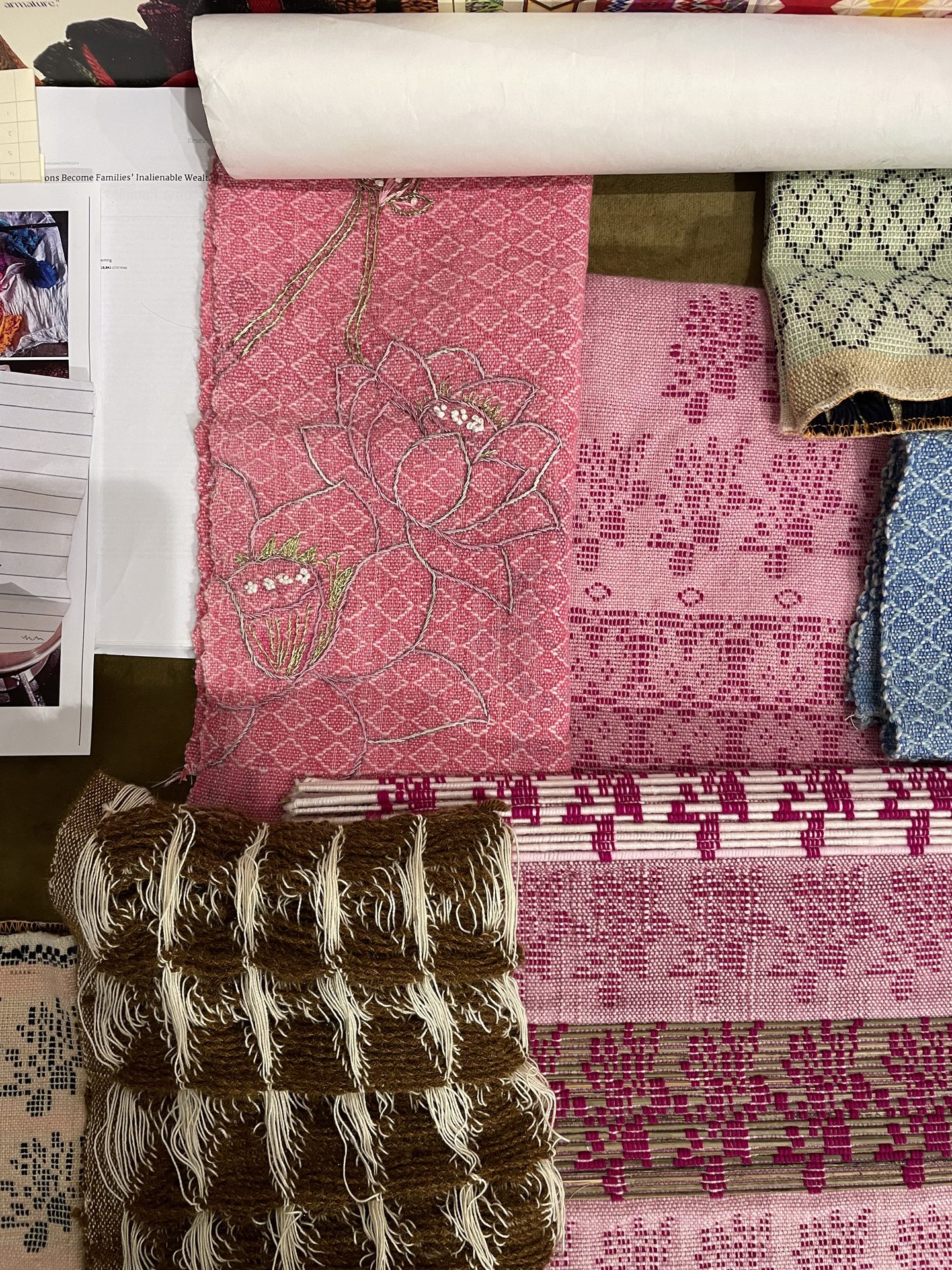
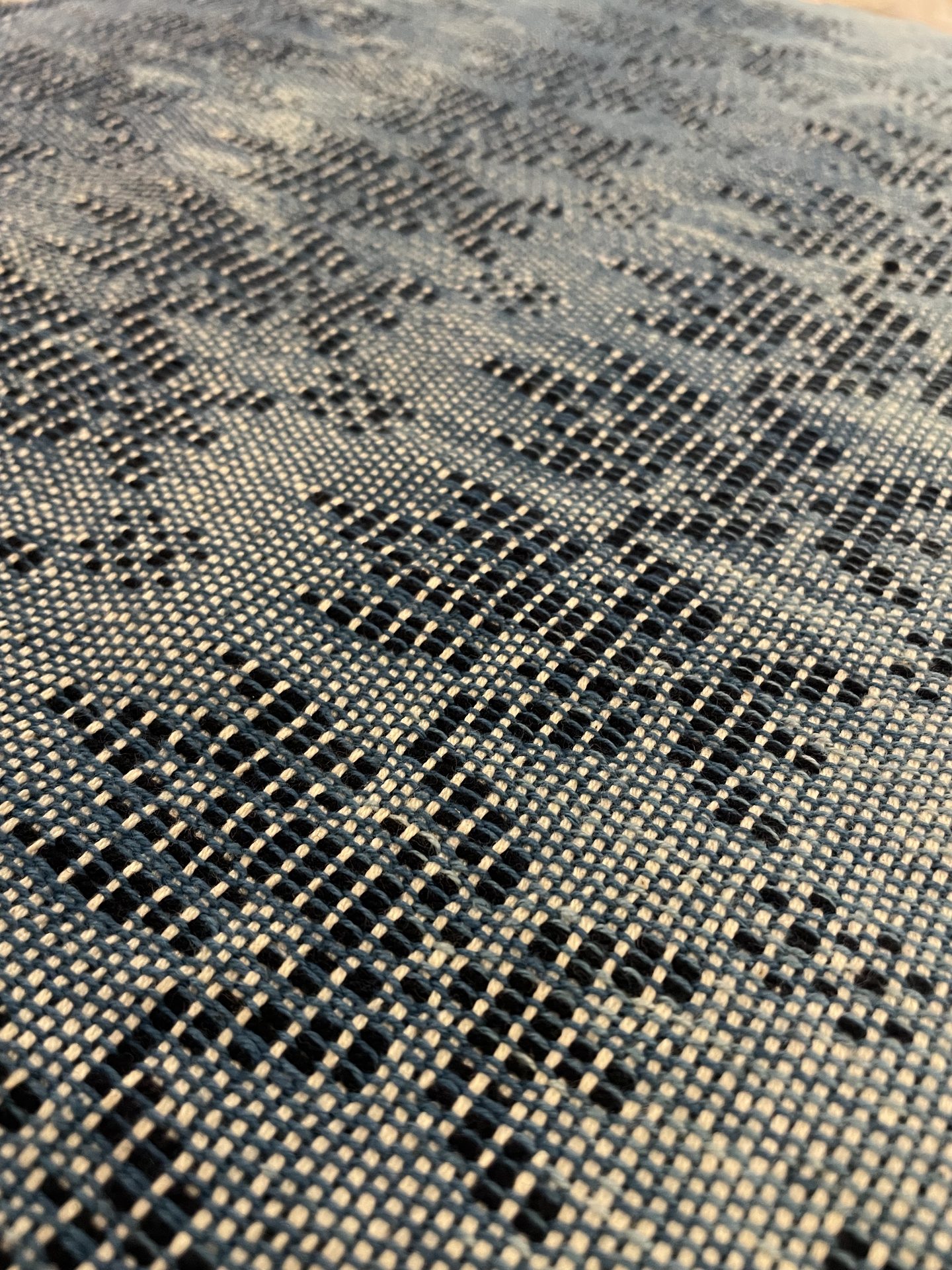
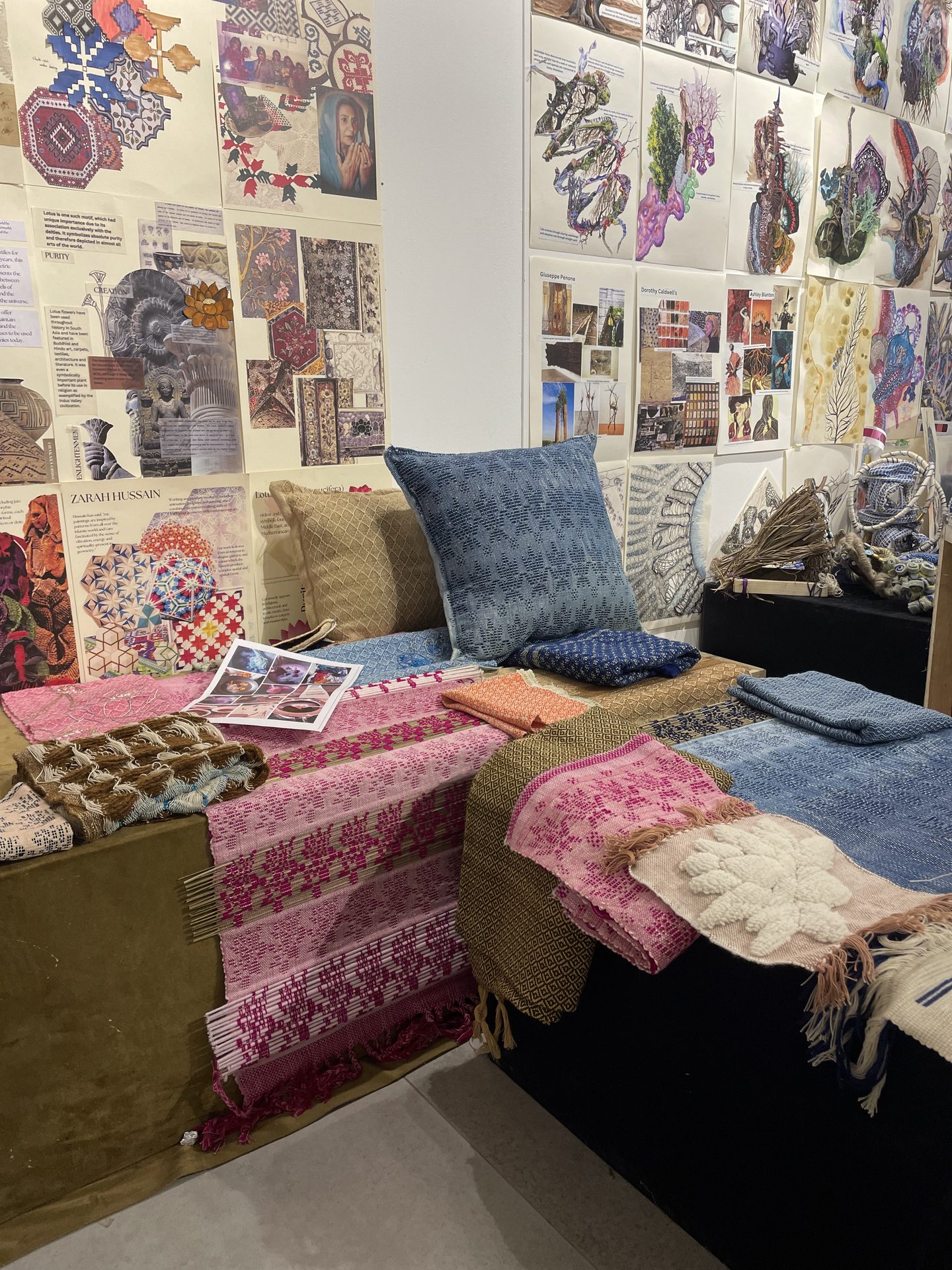
Early samples embroidered the motif onto plain woven cloth, layering it over the surface as an added story. Later, the lotus moved into the structure itself, woven on the jacquard loom — no longer applied after the fact, but built into the cloth from the first thread, the way memory and identity are built into who we are.
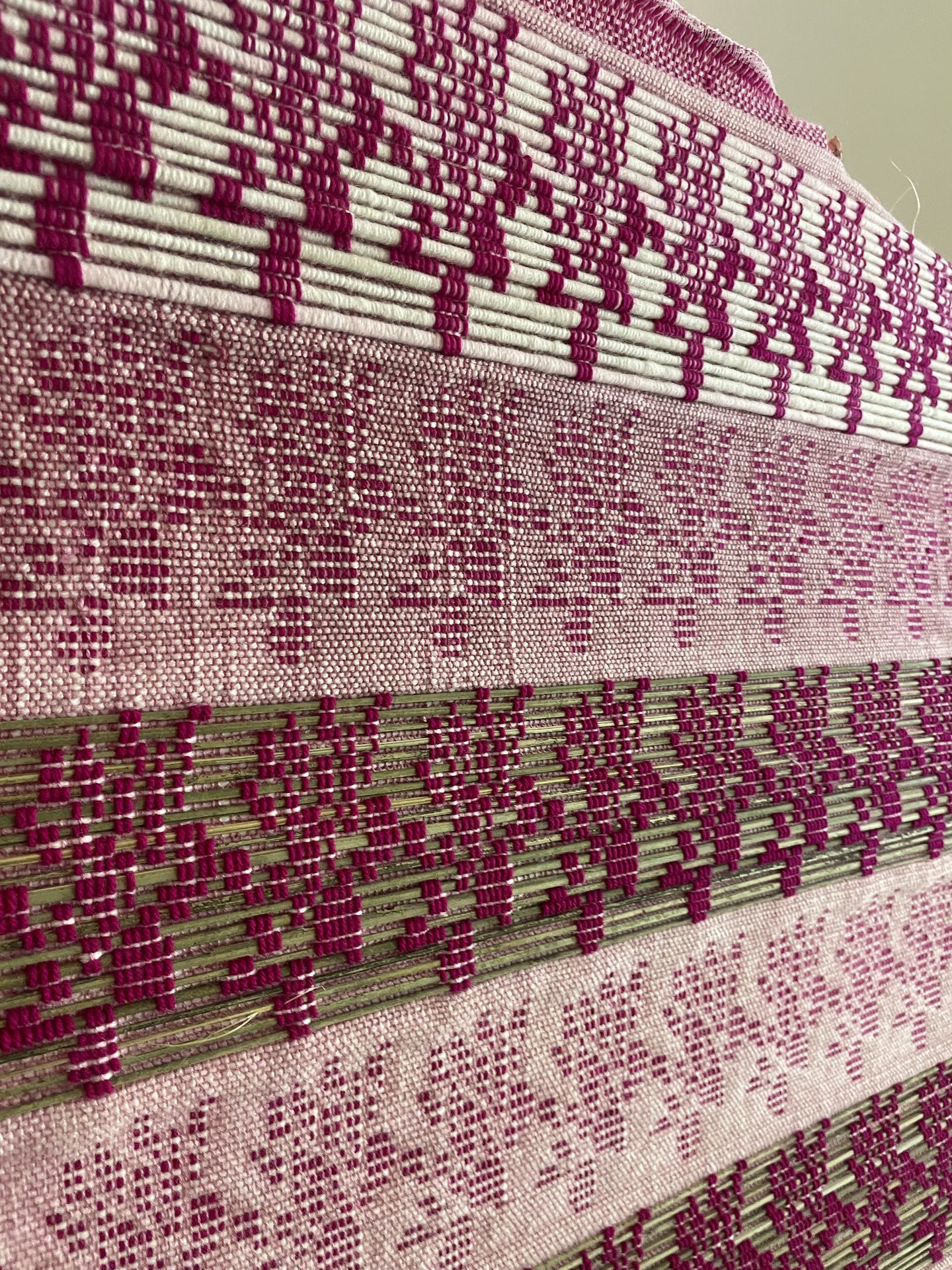
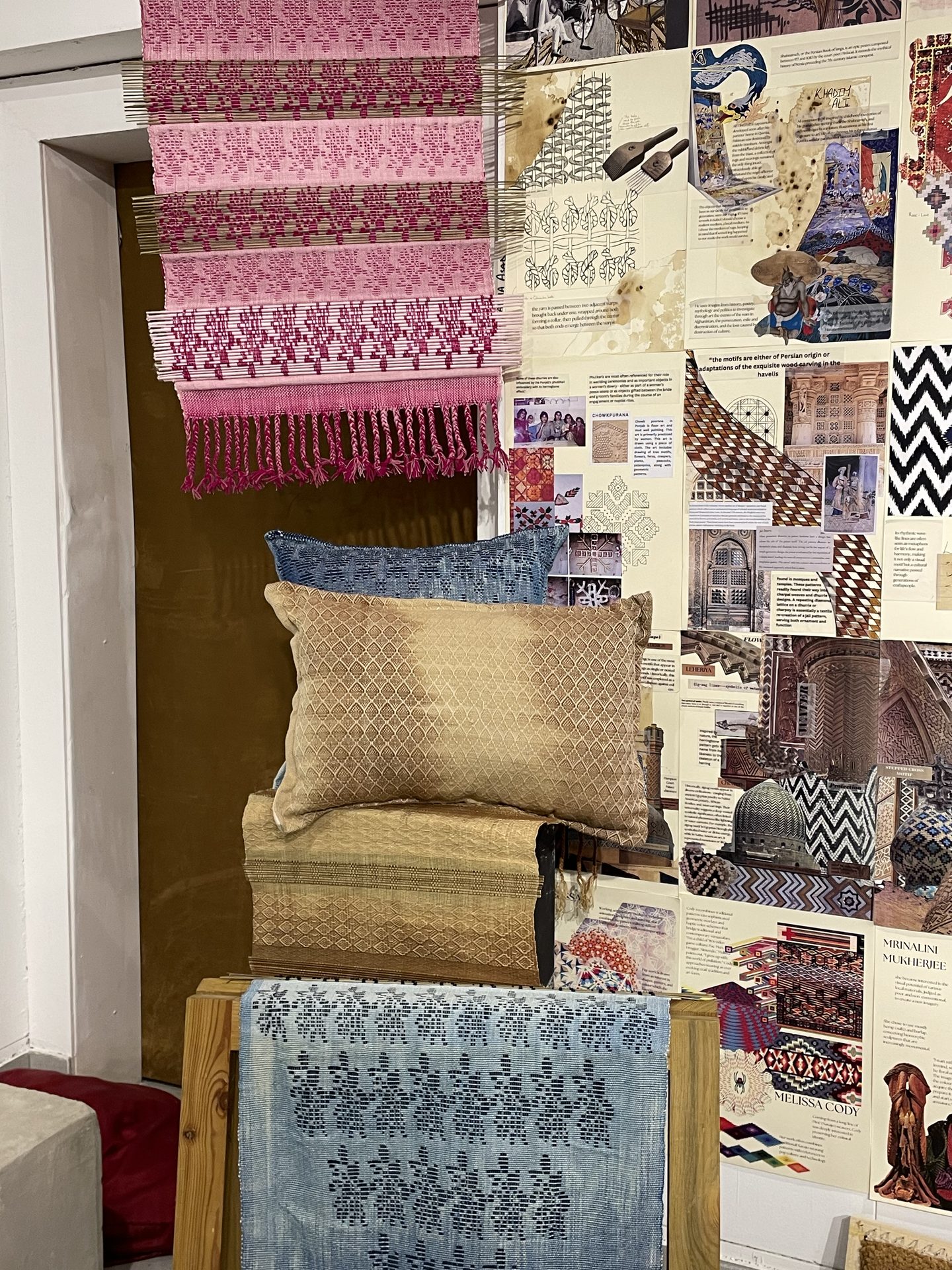
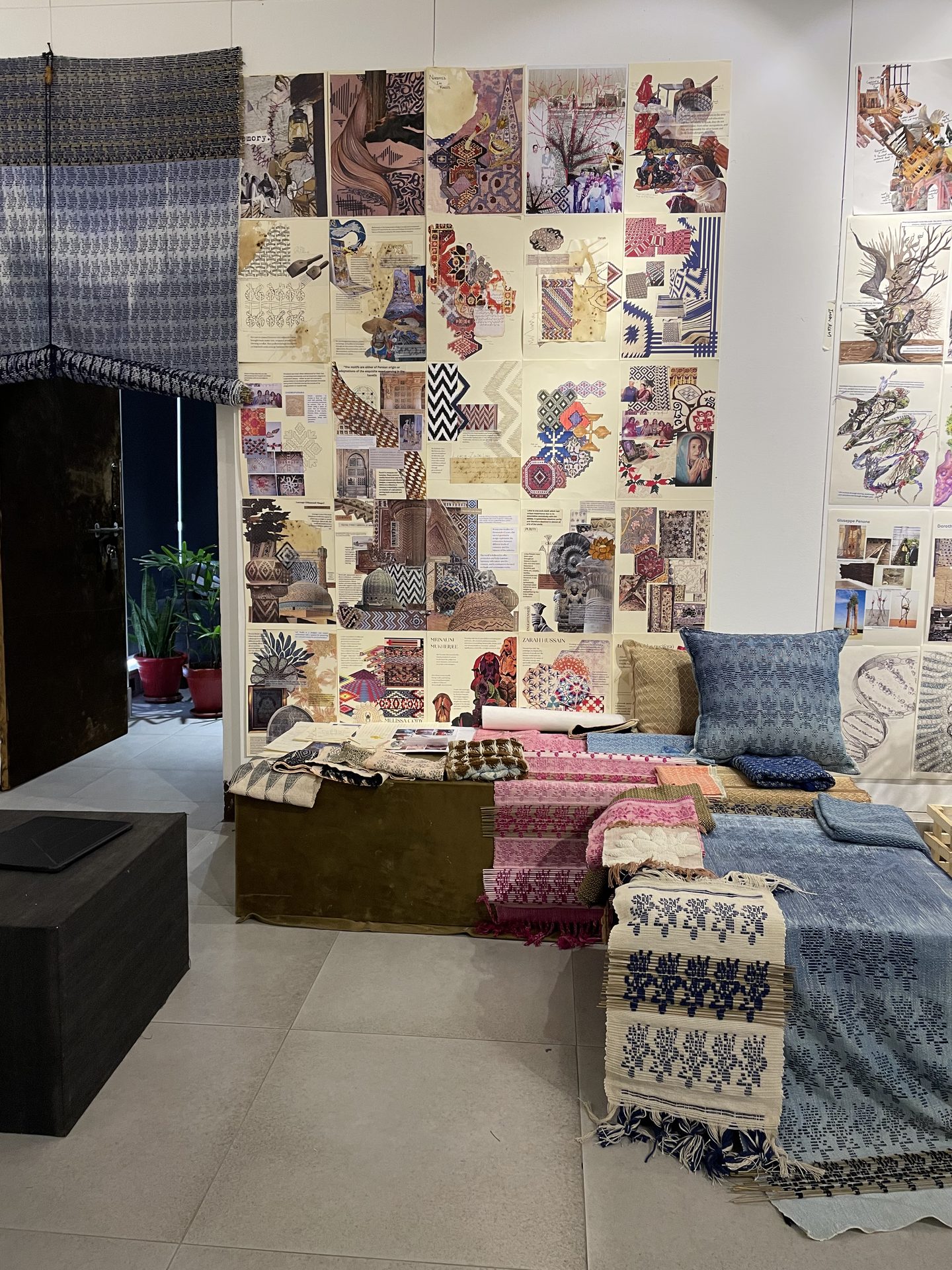
My earliest colour studies were drawn from memory — soft pinks taken from the room my grandmother decorated for herself, full of the textiles and softness I associate with sitting beside her. As the work moved toward a contemporary home textiles collection, that palette felt too narrow, and shifted toward soft blues, beiges and earthy neutrals — colours that held the same warmth but worked more easily within interior spaces. Alongside this, natural dyes made from fruit, vegetable and plant matter gave the yarn an organic variation no synthetic dye could replicate, while wood, cane, badla and tilla threads tested how harder, brighter materials could sit against matte handspun yarn.


The final collection is a set of hand-woven home textiles, with woven chikhs at its centre. Chikhs are traditional blinds — used in village houses as curtains, partitions and dividers, quietly present in domestic life without ever being its focus. That quiet presence is exactly what drew me to them. Here, the chikh becomes a metaphor for the broken link between my grandmother's generation and mine — a surface that divides and connects at once, holding the space of silence and the possibility of repair. The lotus motif is woven into each piece during construction, not added afterward — continuity built into the structure itself, the way memory and identity are carried, not attached.


Jury feedback shaped this project at every stage. Early on, I considered a large interactive installation around memory and intergenerational connection — but discussion with jurors led me toward home textiles instead, a form much closer to my grandmother's own ambition to make and sell textile products. The colour palette went through the same process: early pink-toned samples felt too personal and unresolved for contemporary interiors, gradually evolving into the blues, beiges and neutrals of the final collection. By the mid-point review, the woven chikhs were identified as the strongest expression of the project's themes, and were chosen as the focal pieces of the final exhibition.


This project gave me back a lost branch of my family's history. Through our conversations, the materials, and the weaving itself, I learned about my grandmother's connection to a craft she was never able to sustain — and about the quiet, uncelebrated creative work so many women carry through their lives.
What began as a study of memory became an investigation of identity, inheritance and connection — a form of homage to a practice my grandmother was never able to finish.
Looking ahead, I'd like to grow this collection into a series of personalised home textiles and a sample catalogue — carrying these woven stories beyond the studio and into homes, where they can keep doing what cloth has always done: remember.