A material study of movement — coaxing flat cloth into three-dimensional, light-catching structures through smocking, pleating and origami folding, building toward an eco-printed folded light form.
Overview
Surfaces that Move
Kinetics is the study of movement and the forces that shape it. In textiles and fashion, it describes how fabrics, garments and surfaces shift in response to external forces — air, body motion, light and touch — and how designers can build that responsiveness into the cloth itself. This project began with research into practitioners working at the frontier of responsive fashion, including Behnaz Farahi’s sensor-driven kinetic garments and Ying Gao’s pneumatic, motion-reactive dresses, then moved into hands-on experimentation: a series of fabric- and paper-manipulation studies exploring how a flat surface can be given depth, rhythm and the capacity to open and close. These experiments built toward a final eco-printed, folded light form whose structure expands and contracts like a living surface.
Experiment 01 · Compression
Smocking & Gathered Texture
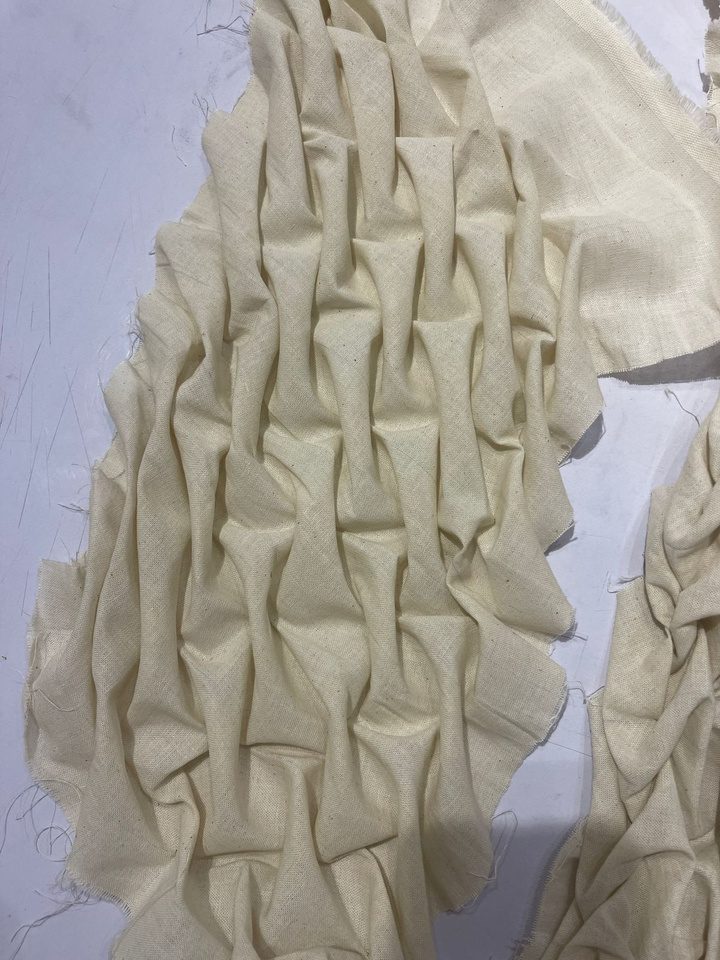
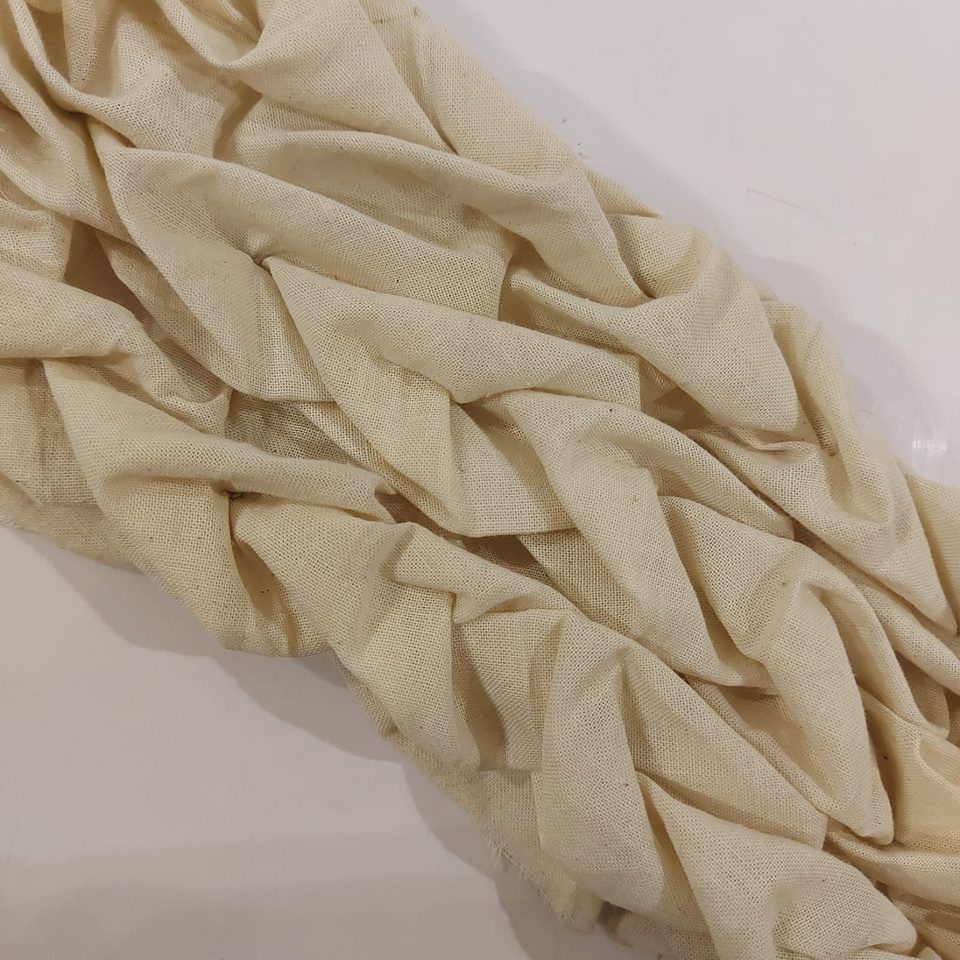
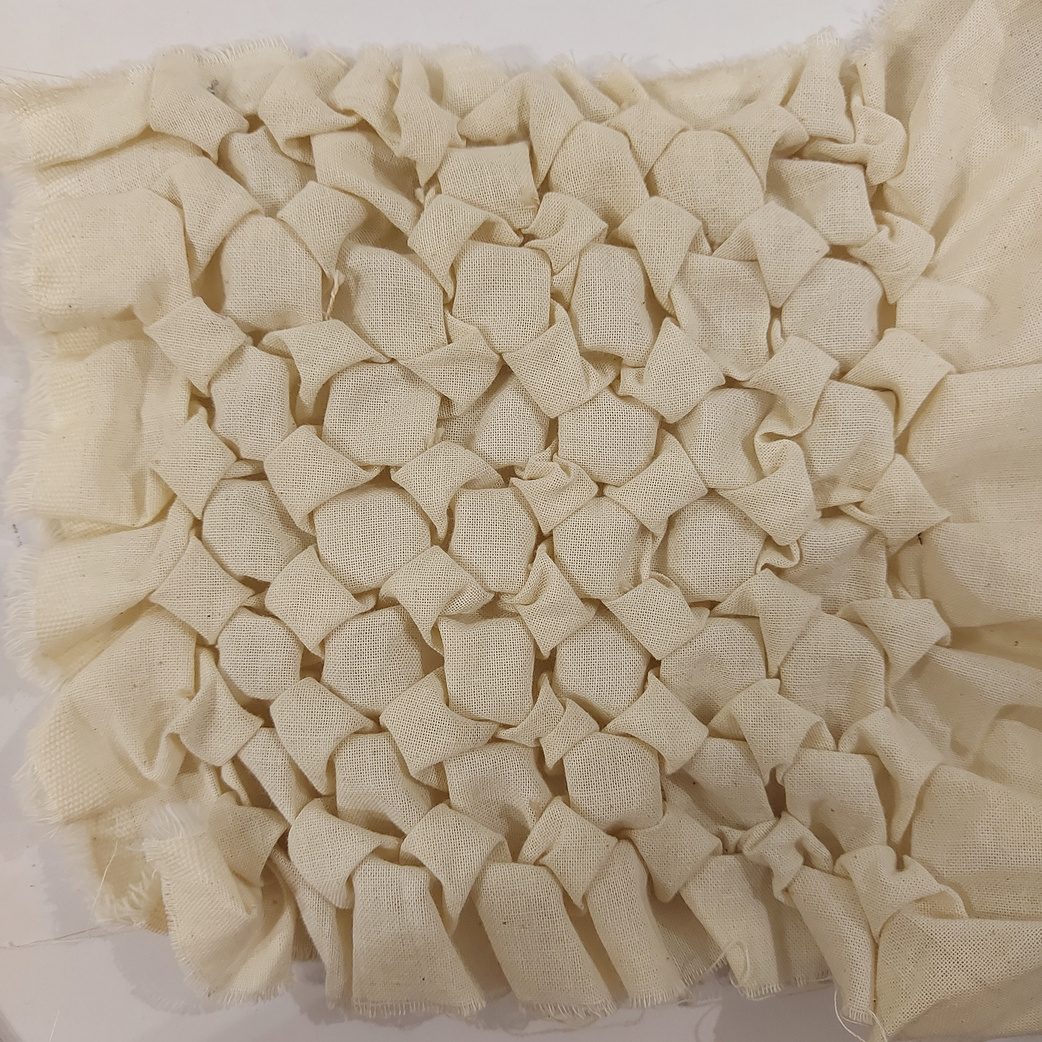
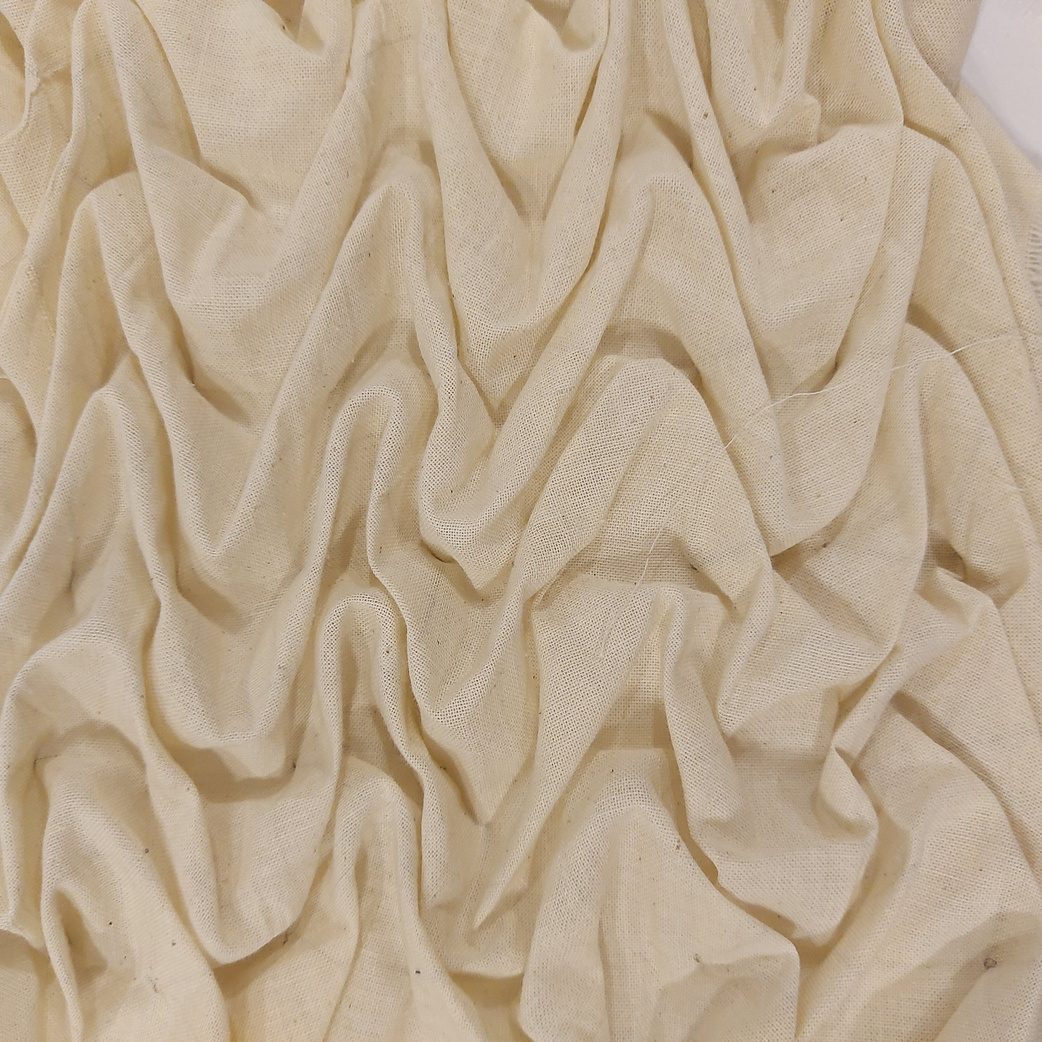
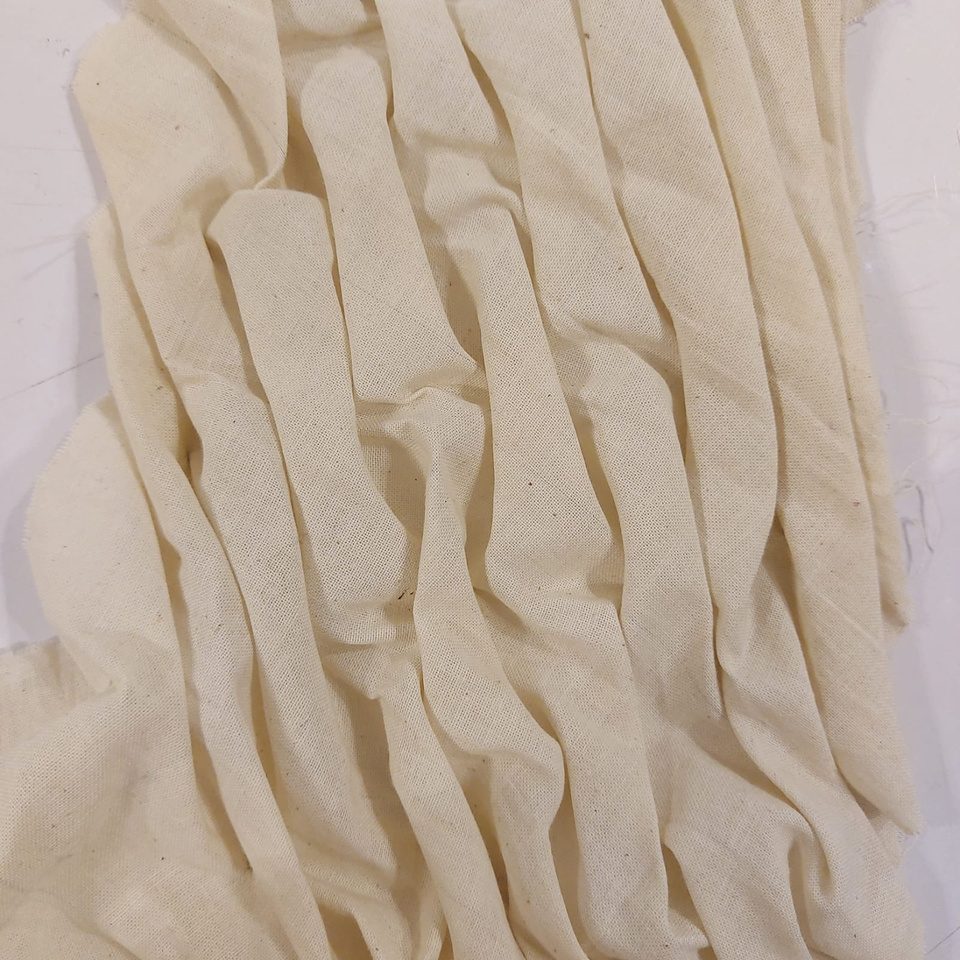
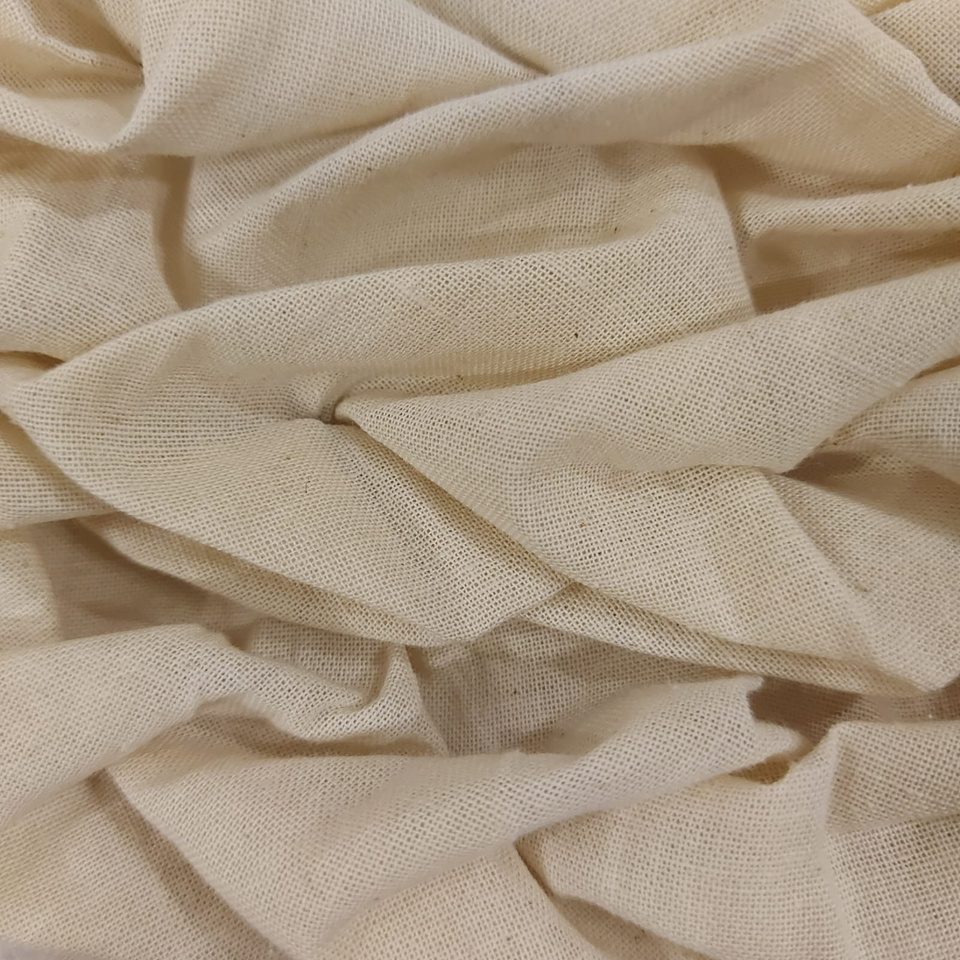
The first set of studies used smocking — a technique of gathering and stitching cloth into regular grids — to compress flat cotton into raised, three-dimensional texture. Worked in undyed calico, each sample tested a different lattice of stitches, producing honeycomb, wave and twisted-rope surfaces that hold their shape while remaining soft and flexible.
Smocking · Vertical Pinch
Smocking · Diagonal Lattice
Smocking · Honeycomb Grid
Smocking · Wave Texture
Smocking · Ribbon Folds
Smocking · Twisted Surface
Experiment 02 · Rhythm
Pleating & Folded Light
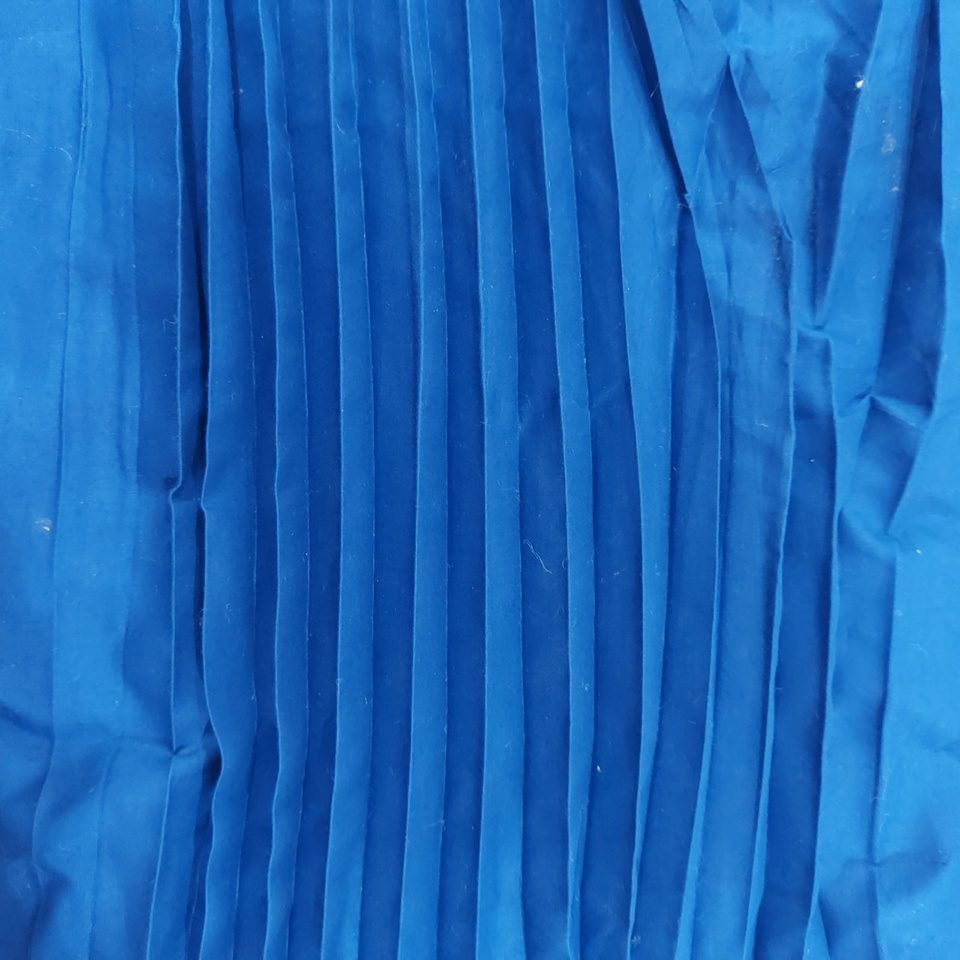
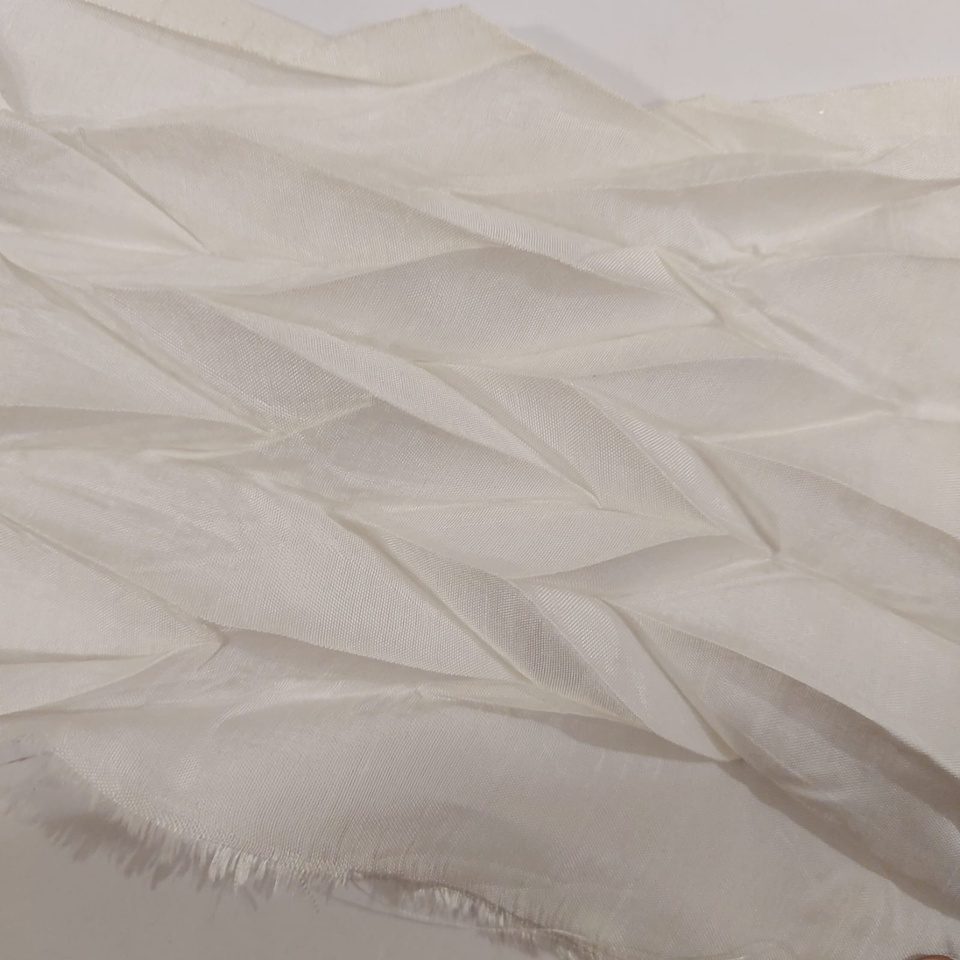
The second study turned to pleating — heat-set and hand-folded creases that give cloth a directional, light-catching rhythm. A densely knife-pleated cotton in cobalt holds crisp parallel ridges, while a sheer organza was folded into a chevron lattice that shifts between transparent and opaque as it moves.
Knife Pleats · Cobalt Cotton
Chevron Lattice · Sheer Organza
Experiment 03 · Folding
Paper Origami Studies
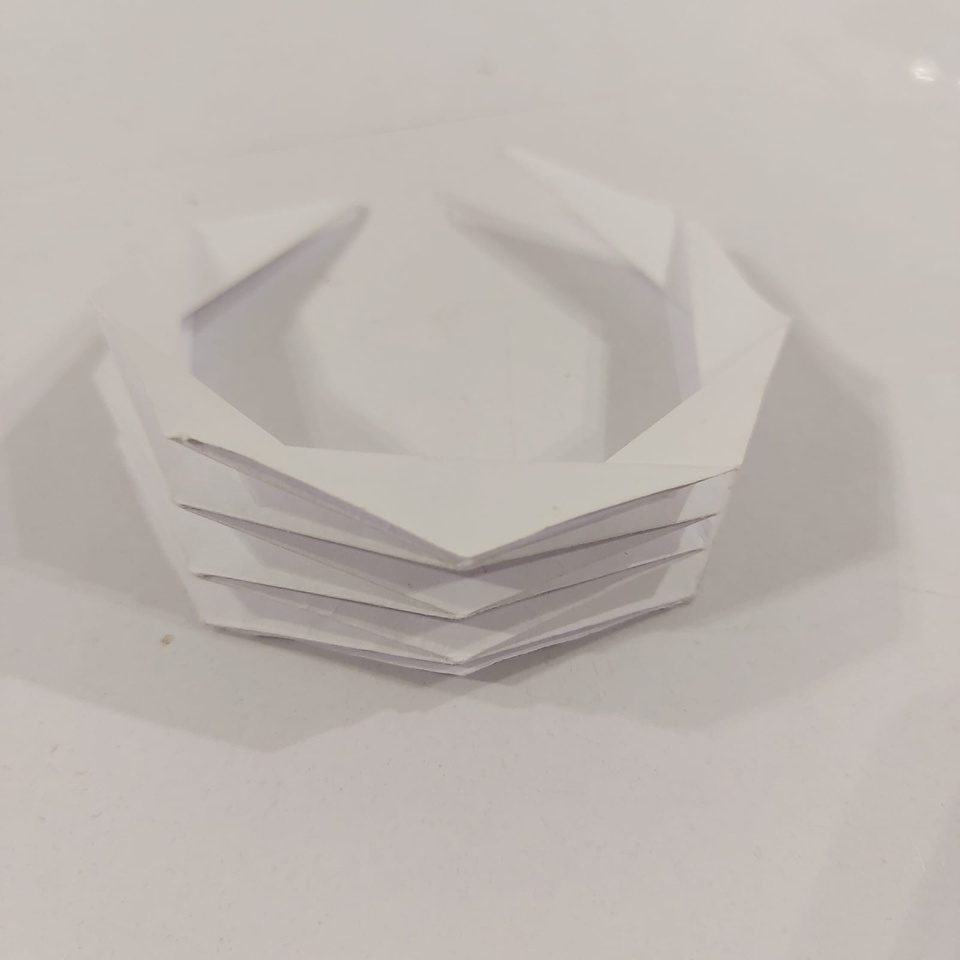
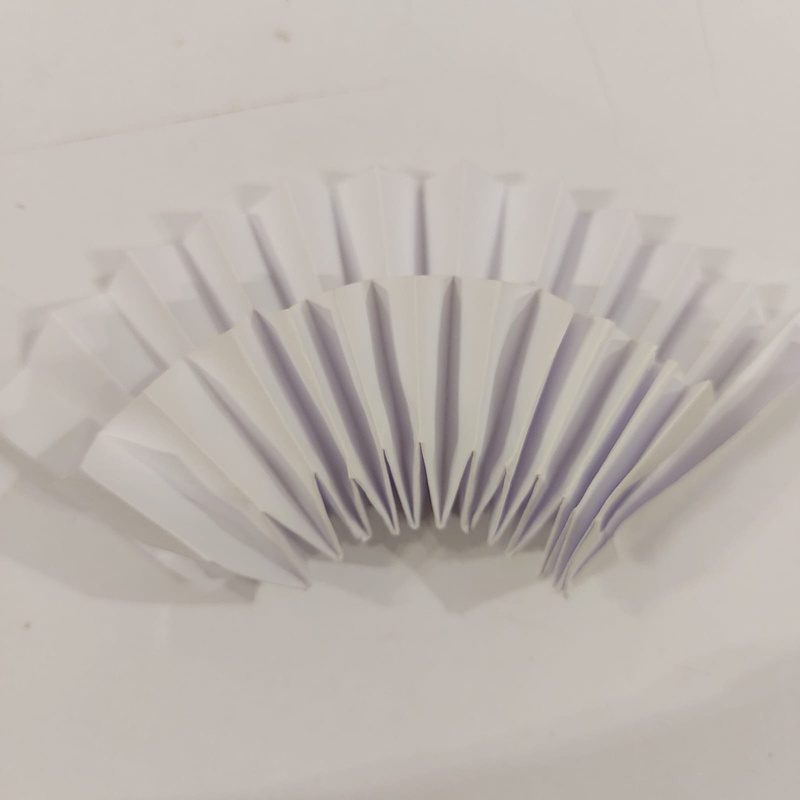
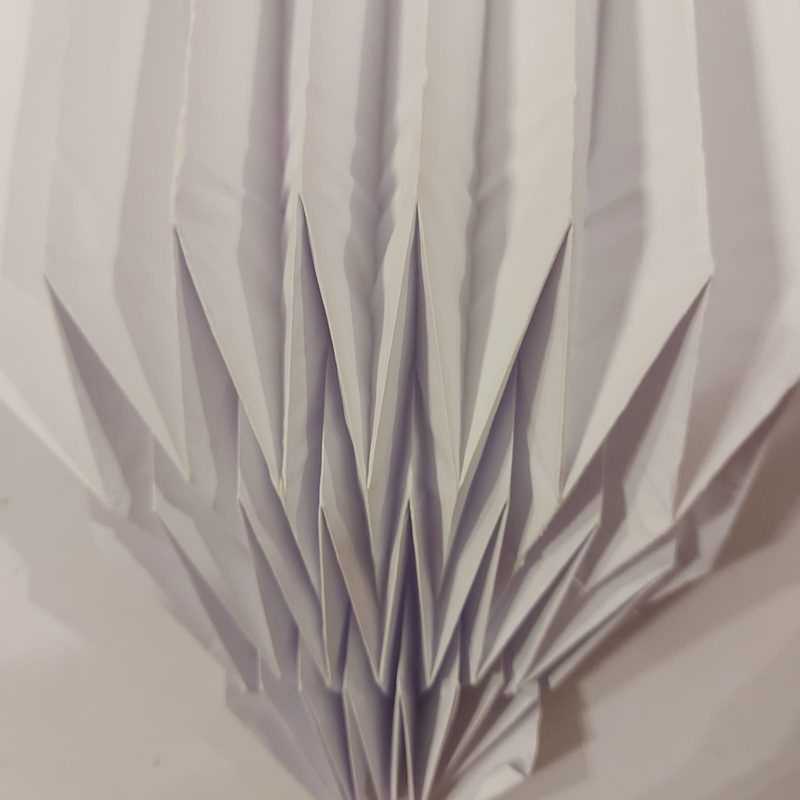
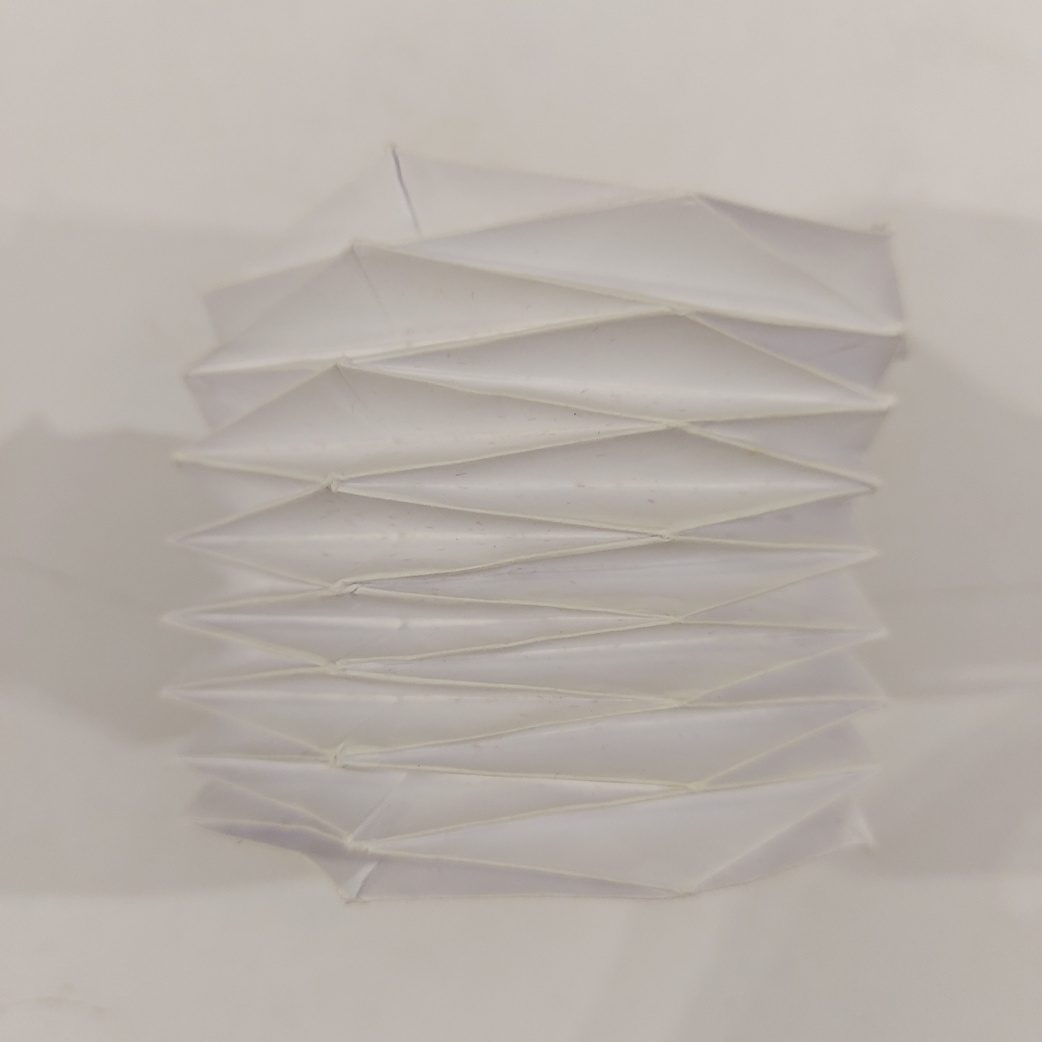
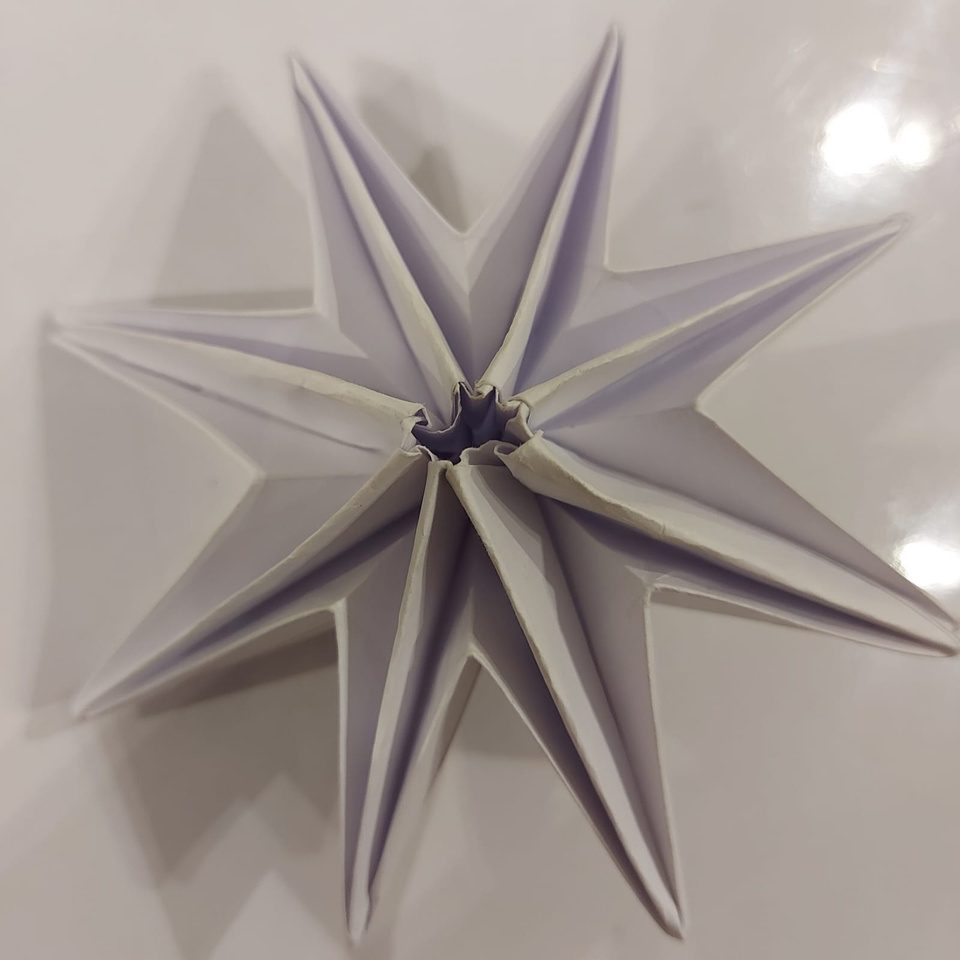
Before working in cloth, the folding logic of the final form was tested in paper. These origami studies explored collapsible, expandable geometries — octagonal rings, radial fans and tessellated diamond grids that fold flat and spring open — mapping how a single sheet can be engineered to move.
Octagonal Ring Fold
Radial Fan · Opening
Pleated Fan · Detail
Tessellated Diamond Grid
Eight-Point Star Fold
Experiment 04 · Translation
Fabric Origami
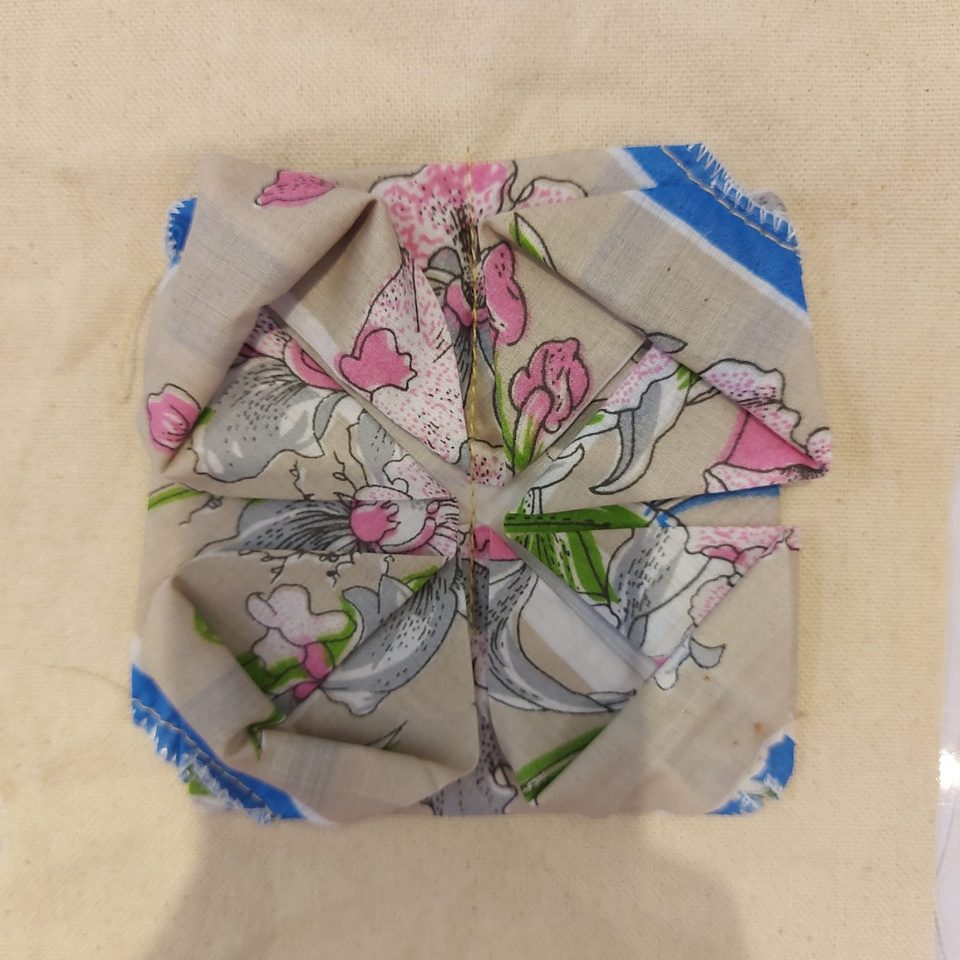
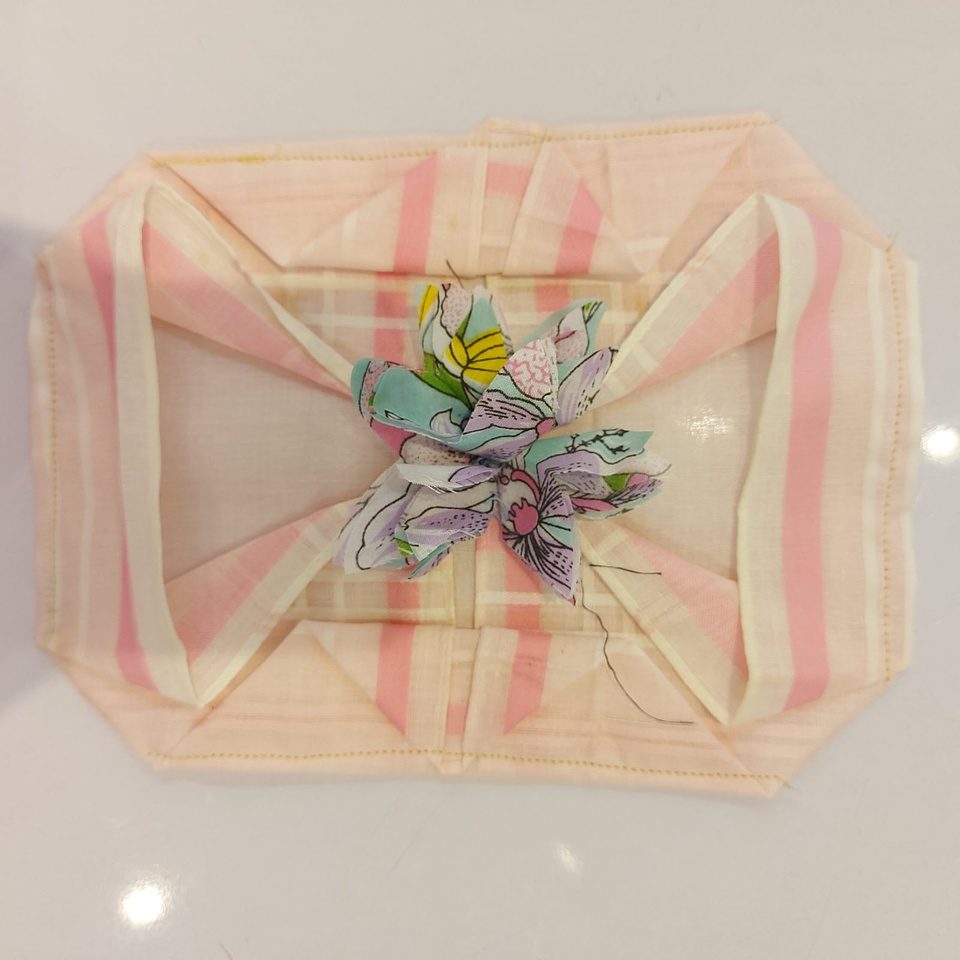
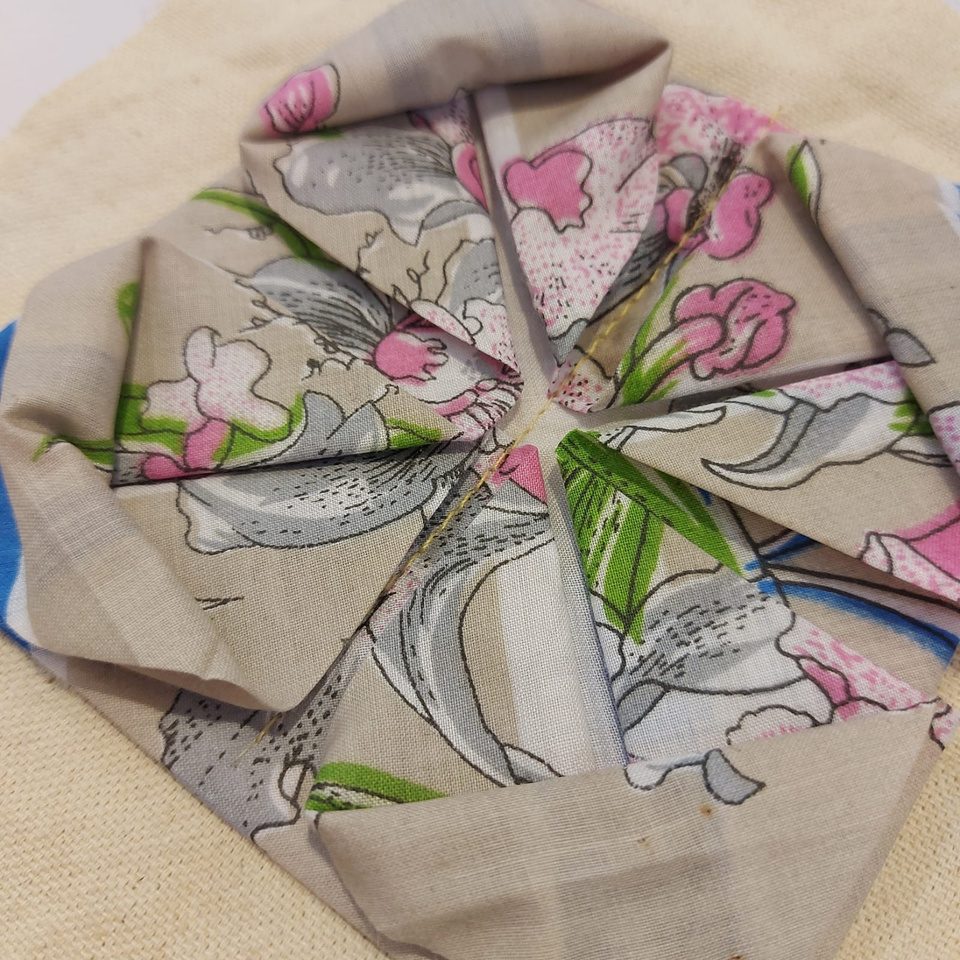
The paper geometries were then translated into starched printed cotton, testing whether cloth could hold a sharp, repeatable fold. Floral handkerchief fabric was pressed and stitched into pinwheel and pouch forms — the point at which the folding studies crossed from paper into textile.
Fabric Origami · Folded Square
Folded Pouch · Striped Cotton
Pinwheel Fold · Floral Print
Outcome
The Kinetic Light Form
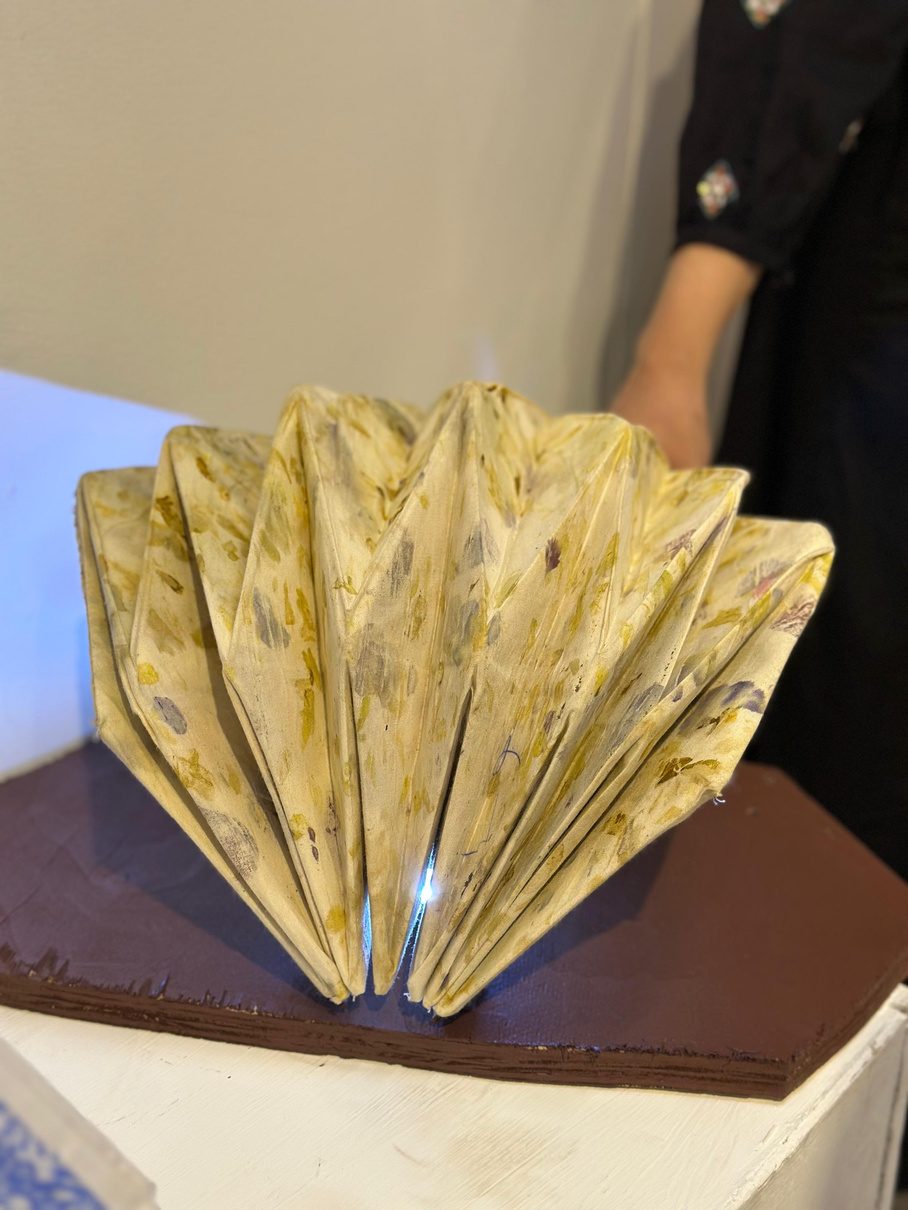
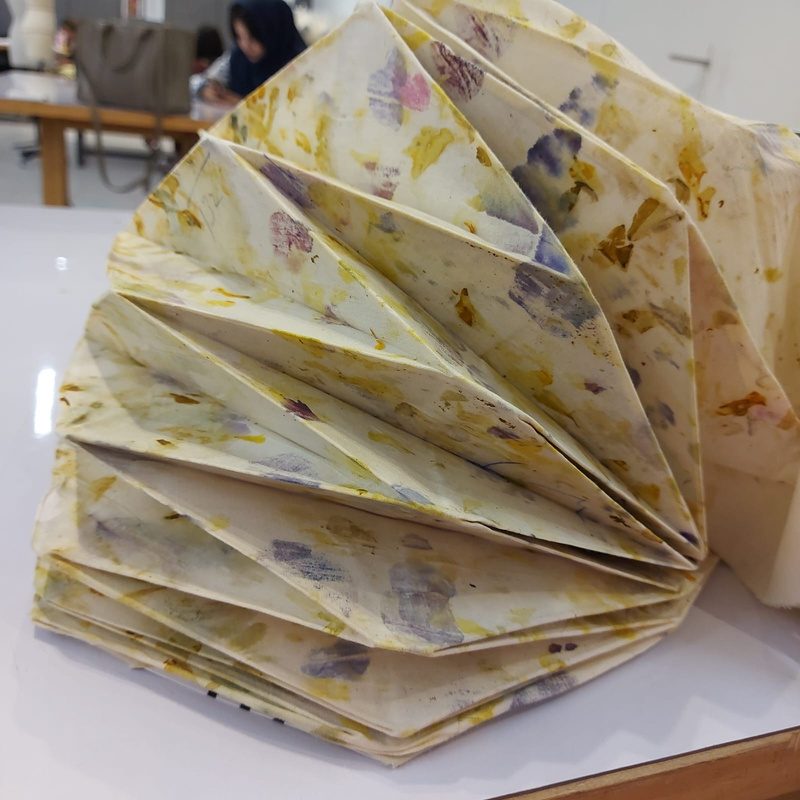
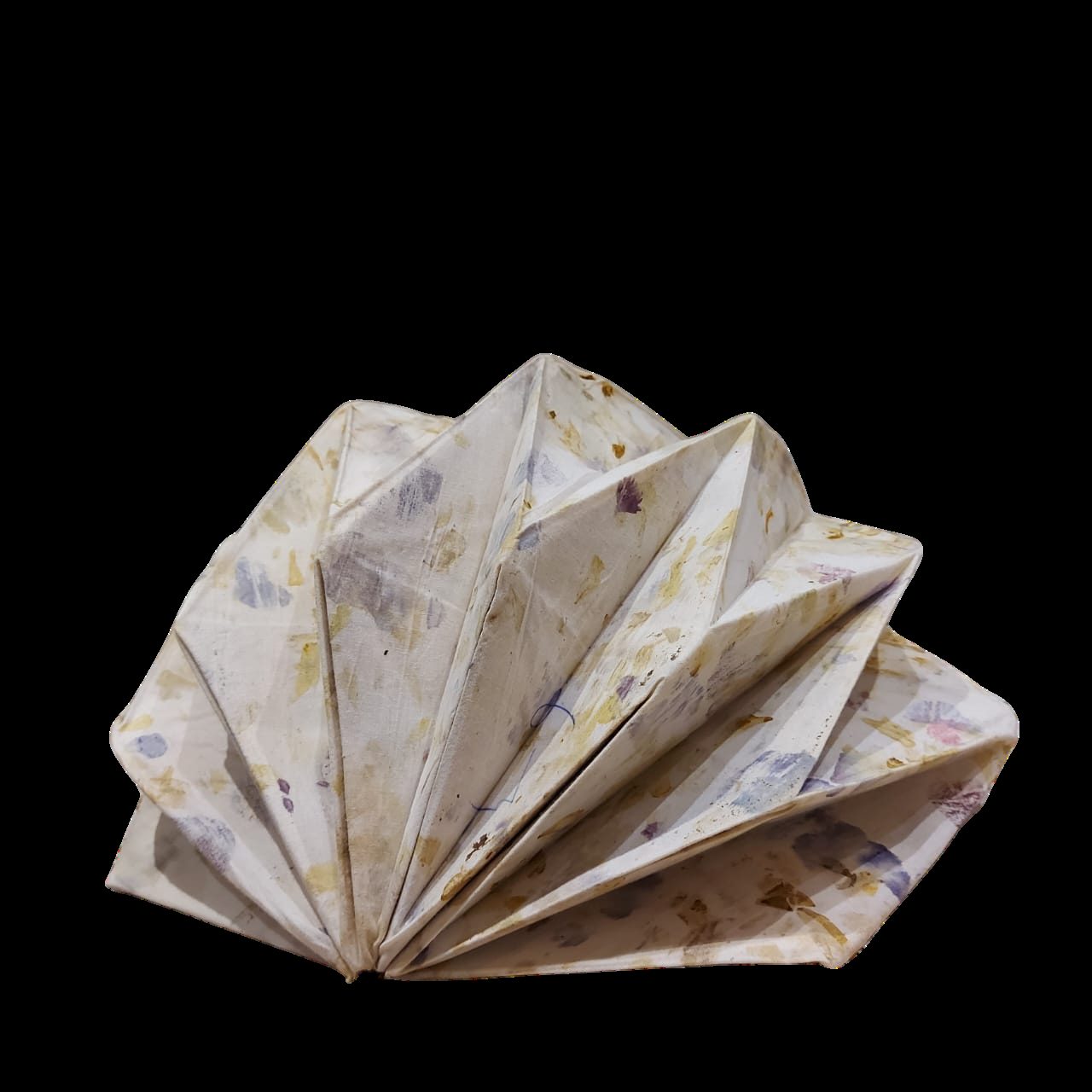
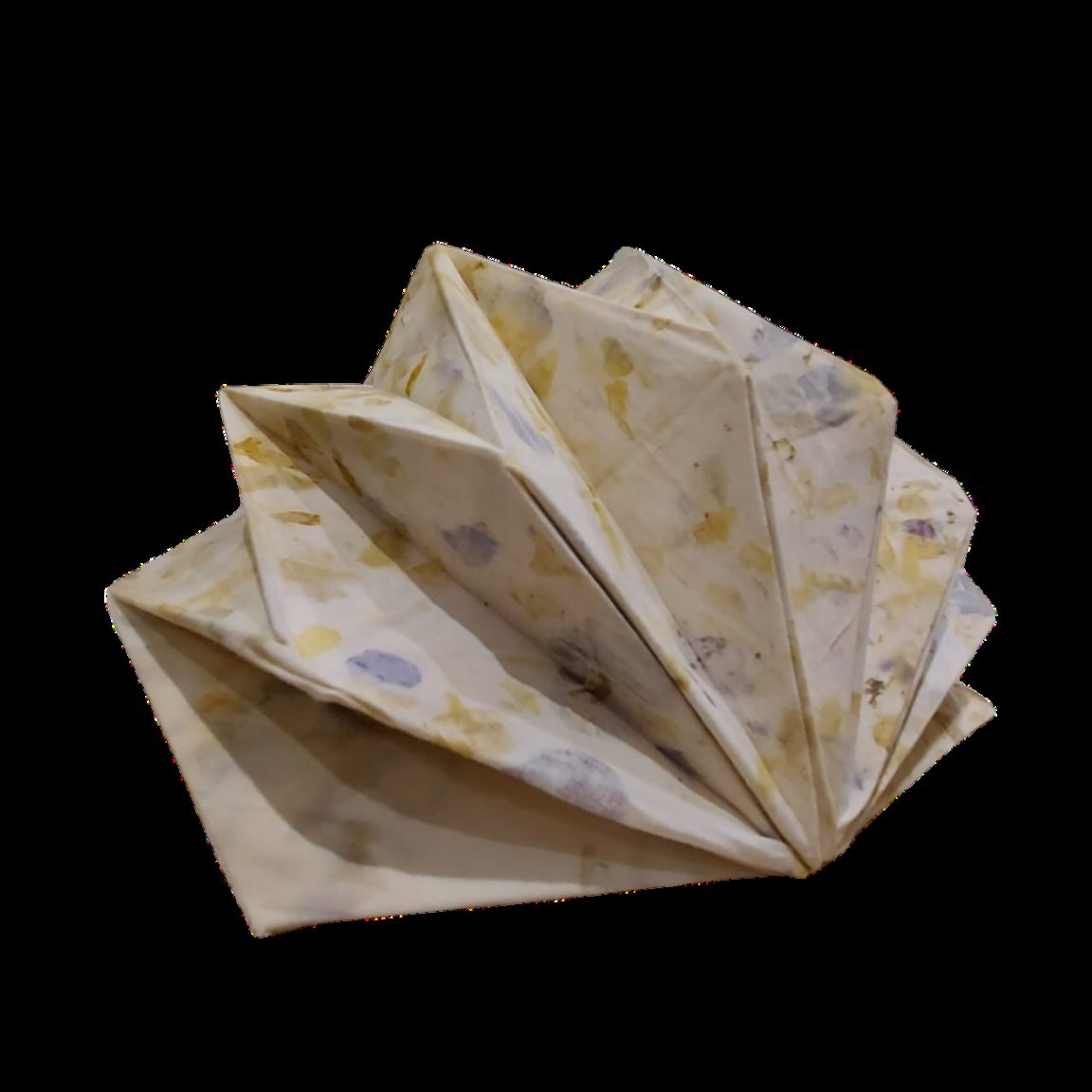
The collected experiments converged in a final piece: a folded, fan-shaped light form built from cotton that was eco-printed with real leaves and flowers, leaving soft botanical impressions across the surface. Pleated into a radiating shell and mounted on a stand with an internal LED, the form opens and closes like a blooming surface — and when lit from within, the pressed-flower prints glow translucently through the cloth.
Light Form · Illuminated
Folded Shell · Studio
Botanical Print · Form Study
Expanded · Form Study
Parallel Study
Kinetic Structures
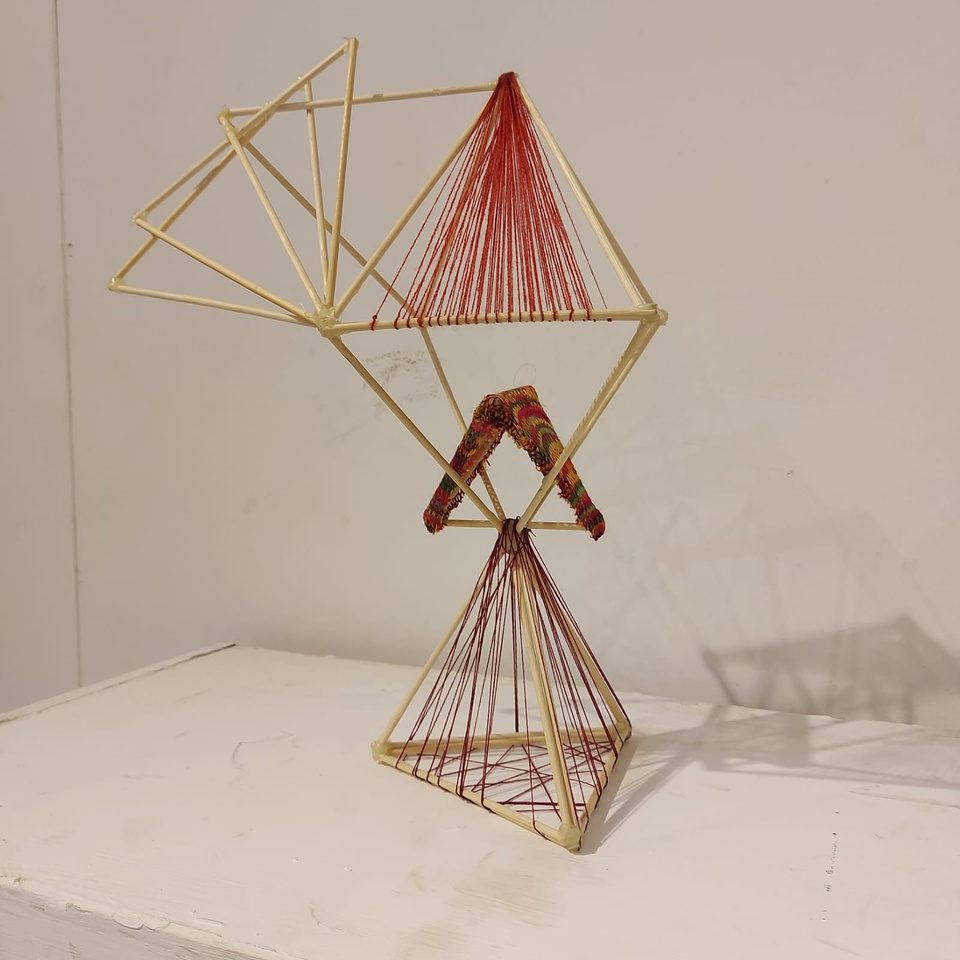
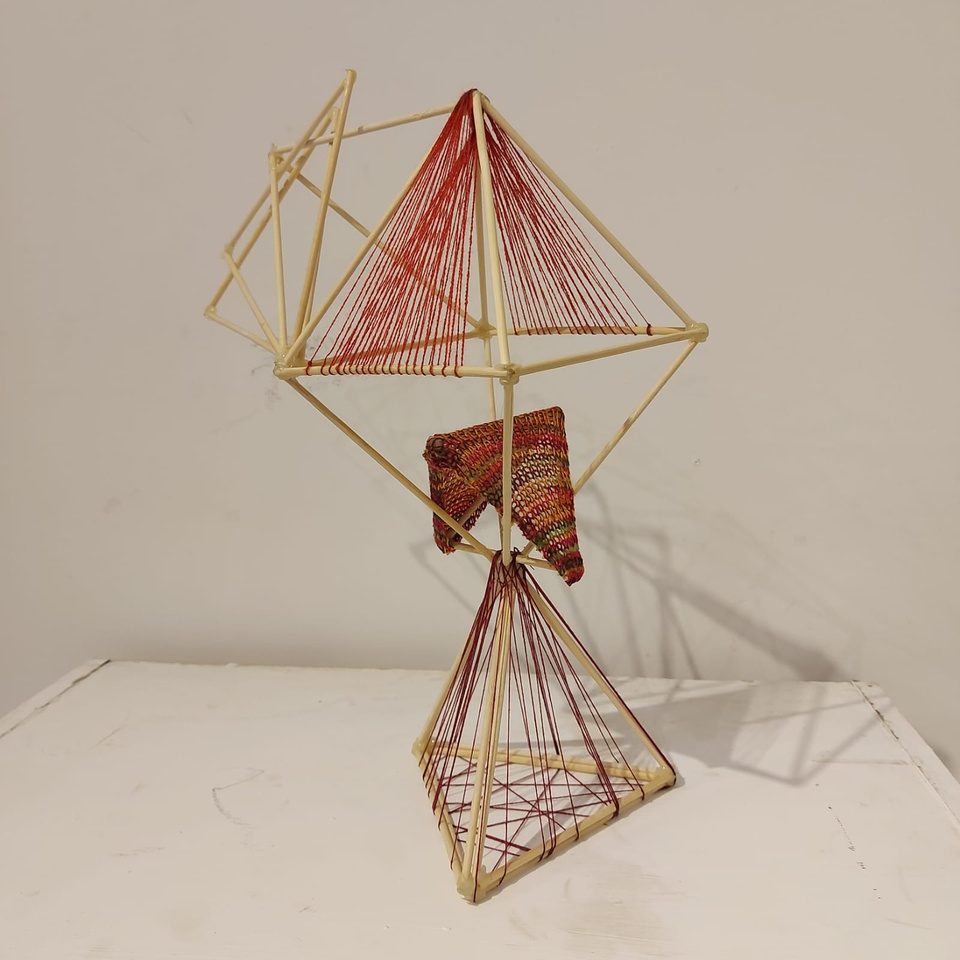
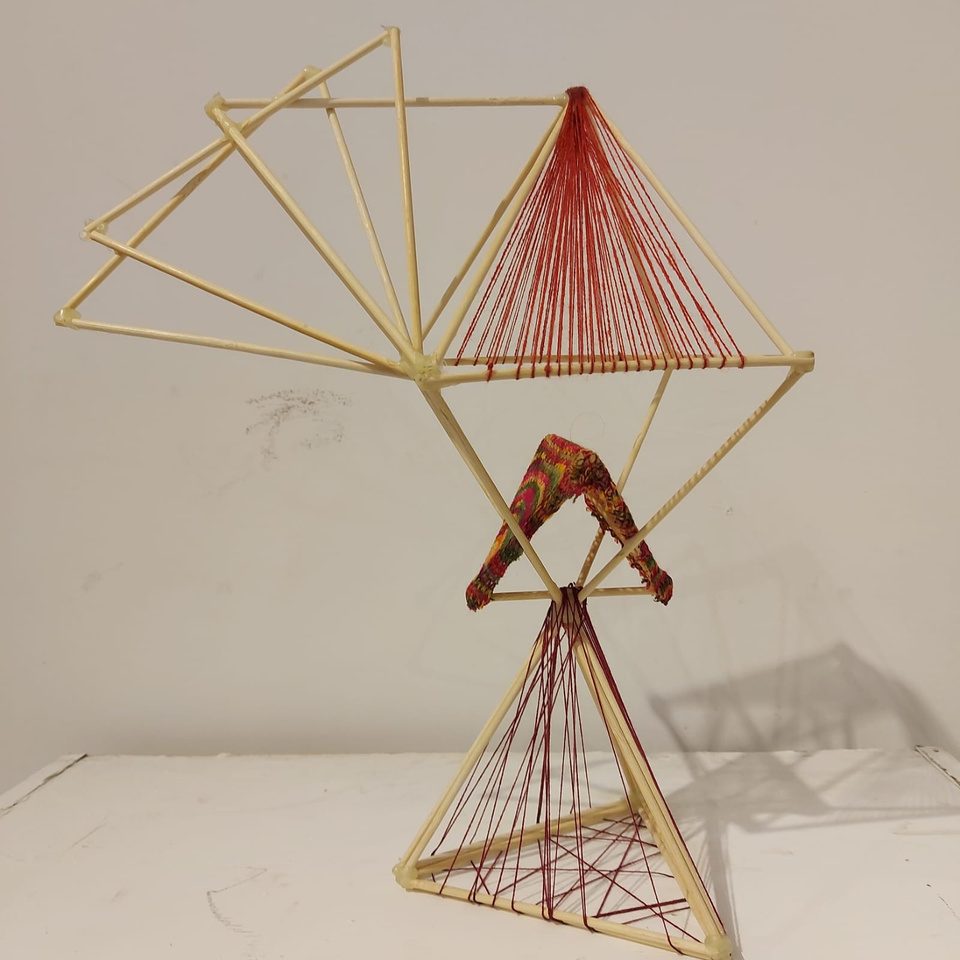
Alongside the surface experiments, a structural model was built to study movement in three dimensions — a balanced armature of bamboo rods strung with tensioned thread, suspending a small woven textile panel between two pyramidal frames. The piece explores tension, counterweight and the suspended, mobile-like motion that defines a kinetic object.